To Deter the Houthis, Enforce Israeli Withdrawal from the Occupied Palestinian Territories
Mainstream news has decoupled the Houthi attacks on international trade in the Red Sea from Israel’s prolonged illegal occupation of the Palestinian Territories and its ensuing genocide in Gaza. Isolating the Houthi ‘problem’ and ignoring the nationalist rights of the Palestinian people will not get rid of the Houthis.
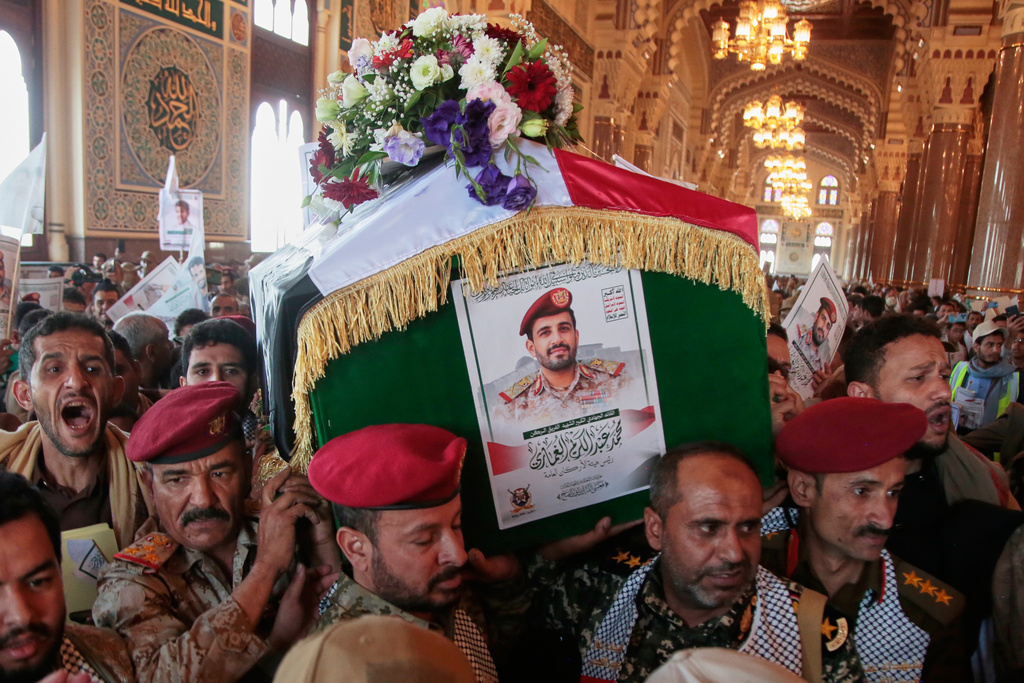
Houthi supporters carry the coffin of Maj. Gen. Muhammad Abdul Karim al-Ghamari, killed by an Israeli attack, during his funeral at the people's mosque in Sanaa, Yemen. (AP Photo/Osamah Abdulrahman)
On Oct. 16, the Houthis declared their military chief of staff, Muhammad Abdulkarim al-Ghamari, dead. He had been killed by an Israeli airstrike weeks before, on Aug. 28, and was one of twelve assassinated, including the Houthi government prime minister, Ahmed al-Rahawi. The Houthis have ceased their attacks on vessels sailing to Israel since the latest ceasefire agreement between Israel and Hamas that the United States, Qatar, Egypt, and Turkey brokered on Oct. 13. When the Houthis were actively disrupting trade in the Red Sea, some mainstream news outlets attempted to tackle the issue without recognizing that the key to deterring the Houthis is enforcing Israeli withdrawal from the Occupied Palestinian Territories so that Palestinian self-determination can eventually be realized.
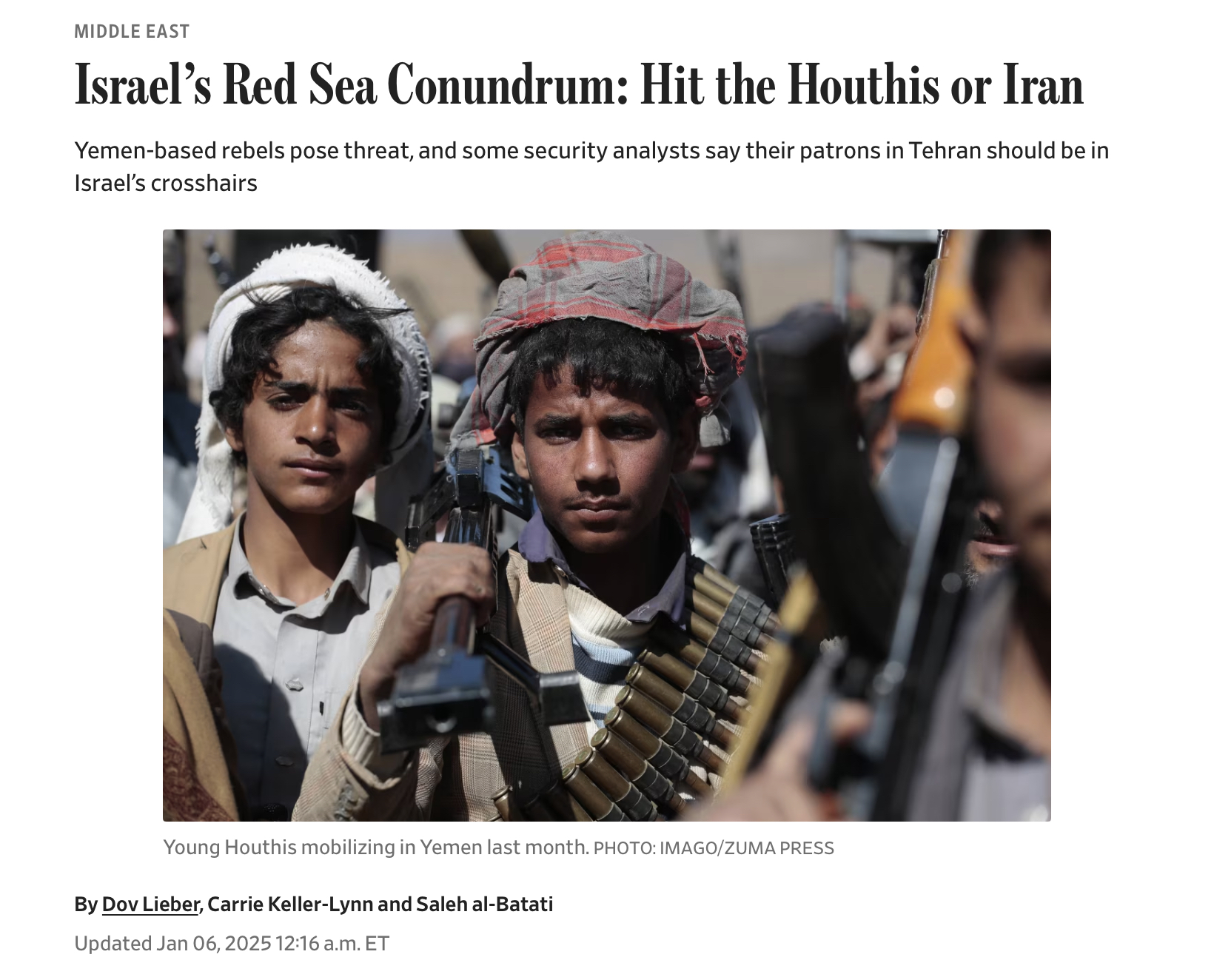
In the Wall Street Journal article “Israel’s Red Sea Conundrum: Hit the Houthis or Iran,” the authors try to figure out how to get rid of the Houthi problem. Those in Israel who argued the country “should hit Iran” contended that this will debilitate the Houthis even if it does not completely stop them from conducting attacks. This, of course, was before the war that would occur five months later between Iran and Israel. The Israelis were wrong. Before the war was over, Thomas Juneau predicted that, despite coming out weaker after the war, “Tehran will continue and possibly intensify its support for the Houthis” because “if anything, Tehran needs the Houthis more than ever before.”
The journalists behind the WSJ article refer to Israeli national security experts to substantiate their argument, but it does not take expertise in national security to understand that a major way to deter the Houthis is not just for Israel to stop bombing Gaza, an idea which again, is not even entertained here, but also to withdraw from the Strip, the West Bank and East Jerusalem and recognize Palestinian sovereignty over these territories. Instead, according to the authors, “Israel’s best option for a long-term solution” to the Houthi problem is “building a U.S.-led regional coalition with Gulf countries.” This option is not even the most ideal, they seem to indicate, for the sole reason that it “could require Israel to make difficult compromises with the Palestinians.”
What they see as a compromise is, in fact, a responsibility under international law. The United Nations Security Council, in its resolution 242, makes full termination of the occupation and settlement-building in the West Bank an obligation. Since the authors imply that Israel would be making a compromise by following international law, it makes sense why they would not make the connection between Palestinian freedom and Houthi deterrence. They end the article by quoting Avner Golov of the advisory group MIND Israel who stated: “‘It’s important Israel will keep striking often to make sure people understand we won’t live with it.’” This was Hamas’ logic too. One might ask: why are Palestinians expected to “‘live with it’?”
Mid-March saw the Signal leak by the Editor-in-Chief of The Atlantic, Jeffrey Goldberg, who was accidentally added to the group chat wherein former national security adviser Michael Waltz and Secretary of War Pete Hegseth texted other high-ranking Trump Administration officials about a U.S. strike on the Houthis as it was happening in real time. In that group chat, Vice President J.D. Vance wrote, “‘I think we are making a mistake. 3 percent of US trade runs through the Suez. 40 percent of European trade does.’” He went on, “The strongest reason to do this is, as POTUS said, to send a message.’” However, argued Vance, that message would be “inconsistent” with the President’s stance on Europe that it is not doing enough for its own security and expects the U.S. to pay for it all the time. Vance also expressed that it could cause a rise in oil prices. Hegseth replied that “‘this [is]not about the Houthis.’” To him, it was about “‘1) Restoring Freedom of Navigation, a core national interest; and 2) Reestablish deterrence, which Biden cratered.’”
The U.S. attack on Yemen was a show of force and dominance more than it was a policing of international waters. The idea that the Vice President would ever question the need to strike the Houthis shows that the armed rebel group’s actions in the Red Sea are not as much of a problem to the U.S. as mainstream headlines would have people assume. The United States remains involved because it has seemingly chosen to commit to defending Israel in perpetuity.
Craig Mokhiber has also written an article about the Houthi presence in the Red Sea. He frames it as a blockade, not as attacks. Unlike the authors of “Israel’s Red Sea Conundrum,” he ties the Houthi blockade directly to Gaza and argues that the Houthis are in line with international law by carrying out the blockade. According to the ICJ, writes Mokhiber, “all states are obliged to cut off all military and economic support both for the Israeli regime’s occupation of Gaza and the West Bank, including Jerusalem, and for its genocidal assault on the people of occupied Gaza.” This finding is grounded in jus cogens, non-derogable norms to which all states are legally bound. Mokhiber believes that “the Yemenis proved the pure humanitarian intent of the blockade by pausing it entirely during the January ceasefire in Gaza, and only announcing its resumption when Israel reimposed the siege and full-scale assault on Gaza in March.”
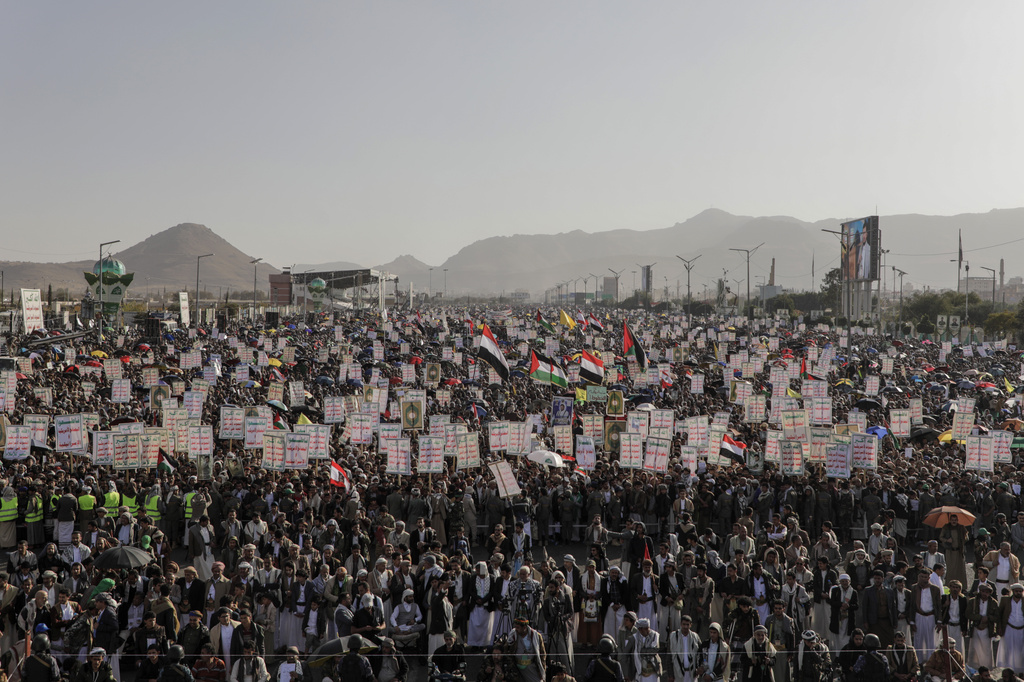
To those who argue that the Houthis have no right to intervene in Israel’s genocide of Gaza because the Houthi government is not internationally recognized, Mokhiber states that the internationally recognized government of Yemen, the Presidential Leadership Council, does not have the power and the means to carry out a blockade, but the Houthis do. Therefore, “as there is both a (heightened) duty to act and a capacity to act, the fact that the country is divided cannot reasonably be said to be determinative in a case where the stakes include genocide.” He asserts that by attacking Yemen for complying with international law, the US is “guilty of two international crimes: the supreme crime of aggression, and the crime of complicity in genocide.”
Some might argue that the Houthi blockade is not of “pure humanitarian intent,” considering that the armed rebel group oppresses its own population. Independent Middle East security analyst, Mohammad Al Basha, was interviewed by Voice of America a year ago. He said that the Houthis had not paid public sector workers their salaries for 17 months and instead the leaders spend the “income from taxes and revenues” on military campaigns and religious celebrations and are “renting out villas or buying nice properties.” He pointedly remarked, “…you have the resources to feed them more, to pay some of their salaries, but you’re refusing because you’re building a military force to – before it was fending off the Saudi-led coalition. Today their cause is going to be to liberate Jerusalem.”
How could a nonstate actor that takes up the just cause of Palestine treat its own people so poorly? It seems that Palestinians always find themselves reckoning with the not so “pure[ly] humanitarian” policies of governments that decide to be their allies. Palestinians may feel a self-imposed need to explain why they welcome that support. The blockade has not noticeably changed the dire situation in Palestine. So, perhaps the answer to this question is not as important.
As for Yemenis, civilians are hurt the most by the foreign terrorist organization (FTO) designation and U.S. sanctions. The Houthis are not as affected because they are not connected to the global financial system. That such sanctions persist deserves scrutiny as well. If the Houthis really are part of an “Axis of Evil,” then why have the good states of the West left it to them to free the suffocating Palestinians from Israel’s brutality?

Nurah Elmashni is a second-year master’s student at NYU studying International Relations with a concentration in Middle Eastern and Levantine Studies. She graduated summa cum laude with a BS in Diplomacy and International Relations from Seton Hall University. Her academic interests include US-Middle East relations, Arab regionalism, political and imperial expediency, critical security studies, and anti-corruption. She is interested in researching the liberal international legal order and Christian Zionism vis-à-vis the question of Palestine.