Against Far Right Hypocrisy, English Multiculturalism

A demonstrator stands on the head of the South Bank lion that sits on the side of the Westminster Bridge, during a Tommy Robinson-led Unite the Kingdom march and rally in London. (AP Photo/Joanna Chan)
As a Londoner, one understands that the city’s identity is not found in its grand monuments or rich history. Rather, it lies in the everyday vibrancy of multiculturalism: you smell it in the jerk chicken and curry at Broadway Market, you hear it in the tapestry of languages on the Tube, and you know it in the unspoken conviction that diversity is our city’s great strength. On Sep. 13, 2025, our identity was threatened.
The “Unite the Kingdom” rally, organized by far-right English Defense League founder Tommy Robinson, drew an estimated 150,000 protesters onto the streets of central London. This imposing display of “patriotism” quickly revealed itself as a hateful spectacle. Flags were raised alongside chants of “we want our country back,” “stop the boats,” and “send them home.” While this rhetoric has been rightly condemned as hateful, my purpose here is not to restate that critique. Instead, let’s take the protesters at their word. Even if we grant, for the sake of argument, that they genuinely want to protect women, promote British culture, and defend England, the case falls apart.

One of Robinson’s prominent claims was the protection of women from exploitation. He billed this march as a stand against “grooming gangs”and has long fronted child-exploitation campaigns “to protect our girls.” Yet, this supposed crusade crumbled under the weight of its own misogyny. Videos circulating online showed some of the very men styling themselves as women’s protectors heckling female onlookers with chants of “get your tits out.” This is precisely the contradiction described by sociologist Sara R. Farris as femonationalism: a calculated strategy that uses the language of women’s rights to make an anti-immigrant and anti-Muslim agenda more palatable. It paints a false picture whereby the only threat to women is the Muslim “outsider.” A politics that invokes “protection” for “our girls” while simultaneously degrading women in real time is not safeguarding; it’s the same old misogyny, weaponized against a racialized other.
“A fierce nationalism happily consumed the fruits of immigration it decries. A movement claiming to protect Britishness borrowed its script from abroad“
Consider, next, the march’s commitment to preserving “English ideals.” Waving the Union Jack and St. George’s Cross with aggressive fervor, their performance of patriotism was designed to project an image of a besieged nation. The irony was apparently lost on some of the protesters who, after a long day of defending English purity, were photographed queuing for onion bhajis at the Southbank Centre. This small, almost comical detail speaks volumes. It reveals a nationalism constructed on contradiction: happily consuming the cultural products of migration while rejecting the people who brought them. To want the flavor of a multicultural London without the multiculturalists is not a coherent cultural position.
Finally, the politics favored American culture wars over any recognizably British tradition. The specific fusion of cultural grievance, Christian-nationalist fervor, and hero-worship of a “martyred” truth-teller has a distinctly American flavor. On the surface, Robinson cast himself as a free-speech martyr: supporters held crosses aloft to chants of “Christ is King”, and signs idolized Charlie Kirk (an American conservative activist killed days earlier). If the aim is to defend a distinctive British political tradition, then importing an American playbook undercuts that very objective.
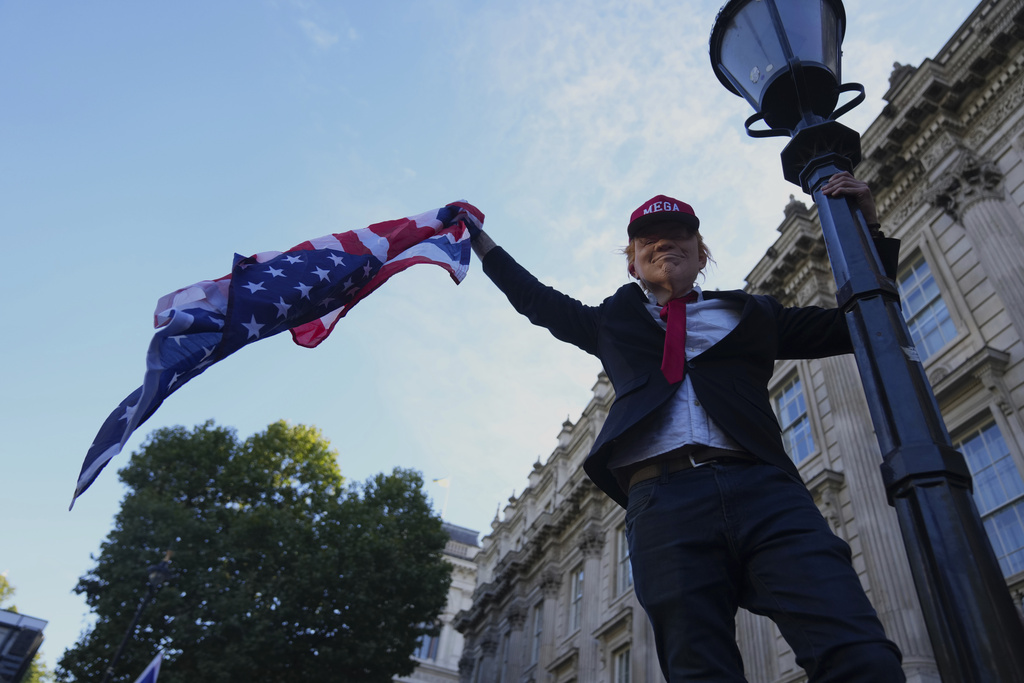
Even granting sincerity, the “Unite the Kingdom” rally was a parade of hypocrisy. A supposed defense of women was riddled with misogyny. A fierce nationalism happily consumed the fruits of immigration it decries. A movement claiming to protect Britishness borrowed its aesthetics and script from abroad. I urge these protesters to pause and ask themselves: If your anger is so righteous, why are your arguments so riddled with contradiction? If protection, culture, and country are truly your values, live them without a scapegoat. Scapegoating tells you that your rent, GP wait times, and stagnant wages are caused by the immigrant cooking your lunch, not by policy failure or political neglect. Aim your anger where it belongs: at broken services, cynical media, and politicians who cash in on division.
This misplaced fury, however, cannot erase the reality of modern England. London’s strength is defined by the very diversity they seek to reject: more than two in five Londoners were born abroad, the highest share in the UK. Contrary to what people like Robinson claim, that statistic isn’t a threat. It’s a portrait of a city that works because of the people who come here. Being a Londoner means knowing that our culture is not static or pure. It is a dynamic, ever-evolving conversation between people from all corners of the globe. If you claim to love this country, prove it by building with the people beside you, not by blaming them.
Abby Ferraro (she/her) is a first-year MA student in International Relations at NYU’s Graduate School of Arts and Science and a copy editor for the Journal of Political Inquiry. She earned her BA in Philosophy and Theology from the University of Oxford, graduating with First-Class Honours and an Exhibition Scholarship. Her academic interests include gender, conflict, and political violence, with a focus on the roles of women in insurgent movements. She is also exploring the relationship between art and political memory, particularly how visual culture shapes narratives of justice and resistance. She has experience in legal research, having worked on litigation strategies and regulatory developments, as well as in policy analysis through nonprofit initiatives focused on climate solutions. Outside of her studies, she enjoys thrifting for hidden gems, dancing enthusiastically (if not always gracefully), lifting weights, and engaging with queer activism.