The Cost of Trump’s Aid Cuts: A Global Rollback on Women’s Safety and Empowerment
Trump’s funding cuts to USAID drastically reduce humanitarian aid to women and girls amid the global crisis. The decision signals a critical shift in US global leadership and downplays its determinant role in threatening survival and regressing gendered consequences of war.
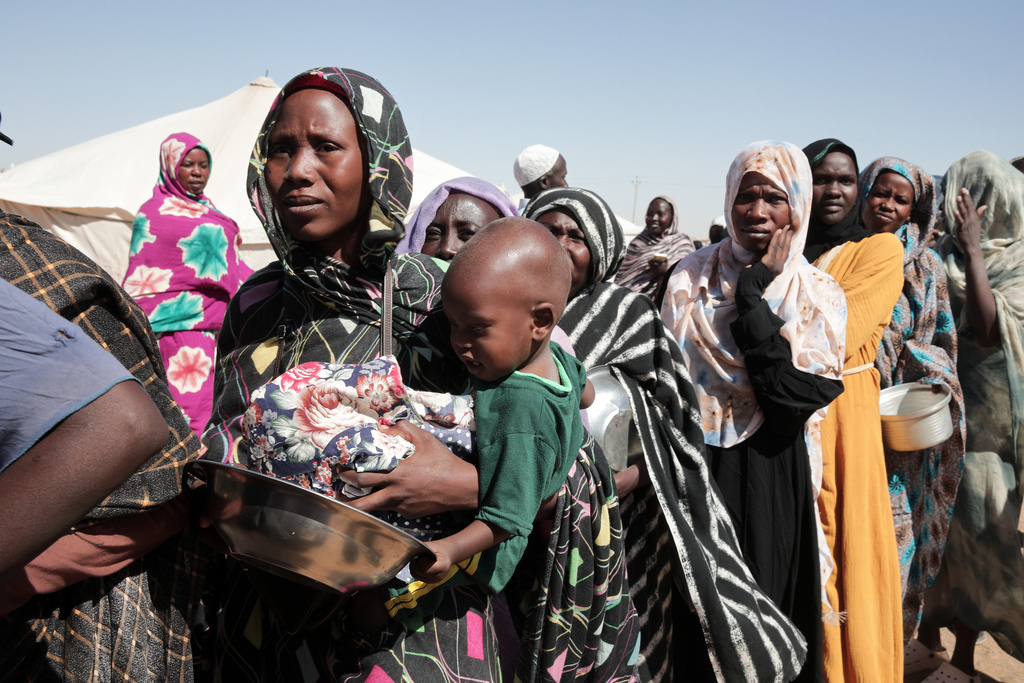
Women displaced from El-Fasher stand in line to receive food aid at the newly established El-Afadh camp in Al Dabbah, in Sudan's Northern State, Nov. 16, 2025. (AP Photo/Marwan Ali)
On his first day back in office, President Donald Trump signed an Executive Order to dismantle USAID–the government agency that provides humanitarian and development assistance to countries around the world.
Within months of that decision, the Nations Office for the Coordination of Humanitarian Affairs (OCHA) reported that these funding cuts directly left 79 million people with no aid and infringed on 76% of organizations’ efforts to deliver life-saving aid to women and girls.
At a time of global crisis, women and girls are particularly affected by growing outbreaks of geopolitical conflicts, food insecurity, mass displacement, and gender-based violence–the likelihood of which escalates to two in three women amid rising conflict. Women and girls rely on women’s rights organizations that are often foreign-funded to preserve their safety.
Following global funding cuts, these kinds of organizations are now substantially underfunded across key service sectors. Gender-based violence prevention and response by 67%, protection services by 62%, livelihoods and cash assistance by 58%, and mental and sexual health by 52%. As of October, the UN reported that 34% of gender-based violence prevention programs have been terminated and there has been a more than 40% reduction in life–saving services, including legal aid, shelter, and healthcare support. Consequently, 59% organizations perceived an increase in impunity and normalization of violence.
The Consequences
These shutdowns endanger the very means of survival. According to UN Women, over 500 women and girls die each day in crisis settings from preventable pregnancy and childbirth complications. Women are constantly denied essential maternal healthcare. Gendered roles further aggravate such conditions. Notably, Carol Cohn, a prominent scholar in the field of gender and security studies, in her academic book “Women and Wars: Contested Histories, Uncertain Futures” challenges traditional, male-centric narratives of war and highlights the diverse experiences and roles of women. She emphasizes that women and girls tend to be the caregivers of society, which exacerbates difficulties in fleeing conflict and creates immense physical and psychological strain. Girls are often denied access to menstrual supplies due to displacement. Even those providing relief face risks of sexual exploitation.
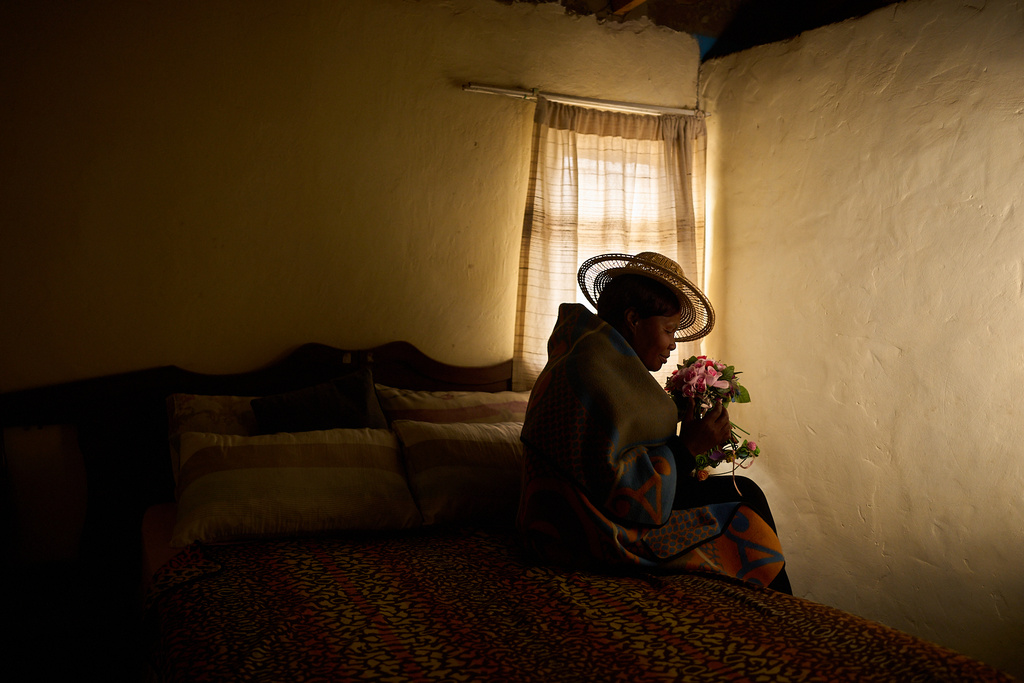
Sexual violence, a common and often overlooked “consequence” of war, leaves survivors with tremendous physical and psychological repercussions. Women need physical care, including suturing of abrasions and tears, antibiotics for infections, emergency contraception, and drugs for HIV prevention. Needless to say, survivors require social services to manage traumatic conditions and prevent suicides.
Apart from direct access to healthcare and violence prevention strategies, women’s organizations work to reach underserved communities, provide psychosocial services and legal assistance, offer a channel for women’s voices to prevail in humanitarian policymaking, and develop economic and social incentives for survivors. Essentially, organizations that serve as the backbone of women’s protection, resilience, and empowerment are now on the brink of collapse.
Victimhood and Agency
The gendered consequences of war have been historically underplayed. For one thing, widespread sexual exploitation and violence were painted as a mere, expected “consequence” of war, as Cohn explains. It was not until 2002 that the ICC’s Rome Statute declared gender-based violence a war crime and requested humanitarian aid in response. Women and girls are continuously forced into victimhood and are unable to claim agency in actively shaping the outcomes of conflict. Women’s rights organizations serve as a cornerstone to shaping not only survival but the growth of agency through empowering women with resources and a hand in policy spheres and peacebuilding efforts.
USAID’s Critical Role
For decades following its founding in 1961, USAID supplied lifesaving medicines, food, clean water, assistance for farmers, kept women and girls safe, and promoted peace–all for less than one percent of the federal budget.
Trump’s rationale for the executive order dictates that the US “foreign aid industry and bureaucracy are not aligned with American interests and in many cases antithetical to American values.” As Senior Vice President and Director of the Global and Public Health Policy Program Dr. Jen Kates points out, Project 2025 called for “freezing foreign aid pending a review by political appointees, ‘refocusing attention away from the special interests and social experiments that are used in some quarters to capture U.S. foreign policy,’ and realigning assistance ‘with American national interests and the principles of good governance.’”
This contentious “America First” rationale significantly undermines the nation’s forged reputation as a global leader. More importantly, it alienates real suffering by claiming such funding does not “align” with American values. Ultimately, Trump diminishes the pivotal value of his decisions–ones that undercut years of established relief, endanger millions of lives, and substantially set back progress in reclaiming agency and empowerment in the face of gendered crisis.
Taskeen Tauhid is an undergraduate Politics major with a minor in Journalism at New York University, where she focuses on public policy, governance, and political accountability. She is a Public Policy Intern at Citizens Union, where she researches New York City government ethics, campaign finance, and electoral reform, and contributes to policy analysis and public education initiatives. Previously, she worked as a Reproductive Rights Intern with the League of Women Voters of New York, where she researched state and local reproductive health laws, contributed to policy briefs on abortion and maternal healthcare access, and supported community outreach efforts during the mayoral election. Taskeen also serves as an Associate Editor for the Undergraduate Law Review, reviewing and fact-checking scholarly work on law and public policy, and as an Editor at NYU Zeitgeist, where she leads the editorial review of student commentary.