Munich Security Conference 2026: The Post-Cold War Era Has Come to an End, But Now What?
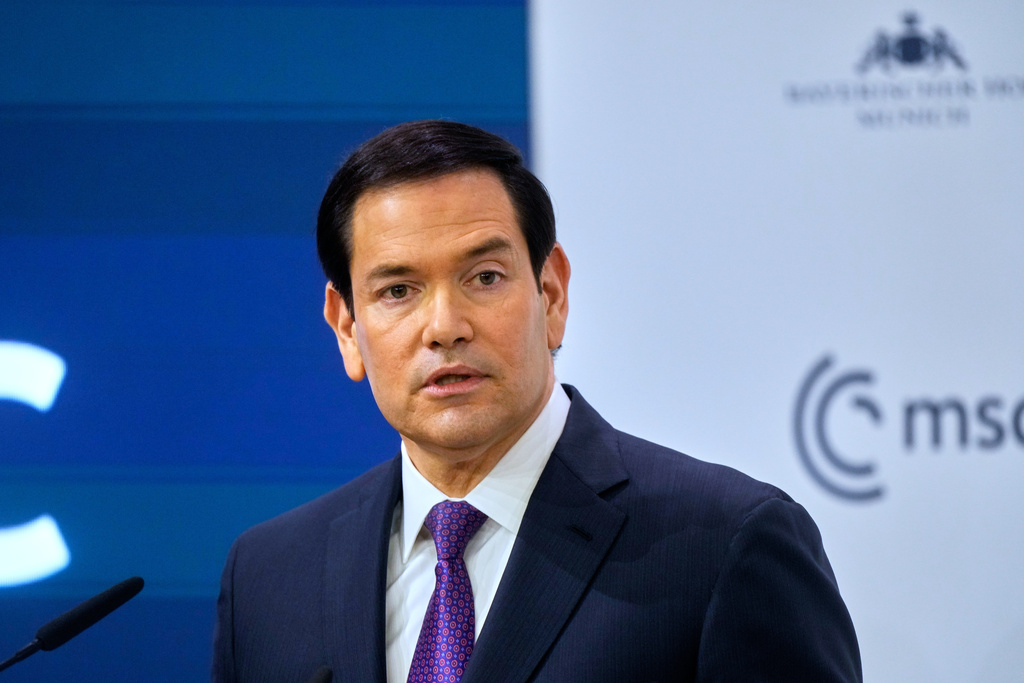
United States Secretary of State Marco Rubio speaks during the Munich Security Conference, Feb. 14, 2026. (AP Photo/Michael Probst)
The Munich Security Conference (MSC) closed its 62nd and arguably most anticipated edition. The forum, which takes place annually in the German city, brings together high-ranking security leaders from around the world. This year’s edition represented a moment of serious reflection at a time when international turmoil is at the highest level in decades.
“Rarely in the conference’s recent history have there been so many fundamental questions on the table at the same time,” said MSC Chairman Wolfgang Ischinger ahead of the event. “We decided that this year’s Munich Security Report should address the elephant in the room head-on,” he added. “More than 80 years after construction began, the U.S.-led post-1945 international order is now under destruction.”
With last year’s U.S. Vice President J.D. Vance’s infamous speech still fresh in the memory, many wondered whether the trend of American hostility towards Europe would manifest itself yet again. Other major talking points were the current Iran crisis, the decline of multilateralism, and China’s growing dominance.
Here are the three key insights from this year’s conference.
1. The rules-based international order is hanging by a thread
During the opening of the conference, German Chancellor Friedrich Merz addressed the so-called “elephant in the room” and expressed his doubts about the current state of the world, claiming that the international order based on rights and rules “no longer exists in the way it once did.” Merz referred to the era of international cooperation that emerged after World War II, when a system of treaties and institutions was established to manage global interactions through peaceful means. Overall, his speech had a cautionary tone, warning about a future of unpredictability: “We have to understand that in the era of big powers, our freedom is no longer a given,” said the German chancellor. “We will need to show firmness and determination to assert this freedom,” he added.
Similar words were uttered a month earlier by Canadian Prime Minister Mark Carney at the World Economic Forum in Davos. Carney talked about a “rupture in the world order” and the return to great-power politics. While it is clear what led us to this point—the Russian invasion of Ukraine, the American break with former alliances and international institutions…—many leaders and policymakers are still grappling with what this concretely means for the near future of global security.
2. The transatlantic alliance could be repaired
In stark contrast with J.D. Vance’s speech last year, U.S. Secretary of State Marco Rubio offered a much friendlier attitude towards Europe. “In a time of headlines heralding the end of the trans-Atlantic era, let it be known and clear to all that this is neither our goal nor our wish,” Rubio stated on the second day of the conference. He did, however, echo the same critique as Vance on European “civilizational decline,” citing the “climate cult” and “mass migration” as causes.
Rubio’s speech was likely aimed to renew the trust in the U.S., but European leaders remained skeptical. “When you talk about content, what Mr. Vance said and what Mr. Rubio said an hour ago was pretty much the same,” replied Belgian Defense Minister Theo Francken in an interview with Foreign Policy shortly after the speech. Still, it signifies a form of de-escalation, especially after the transatlantic alliance collided last month over Greenland.
3. The future of European security remains uncertain
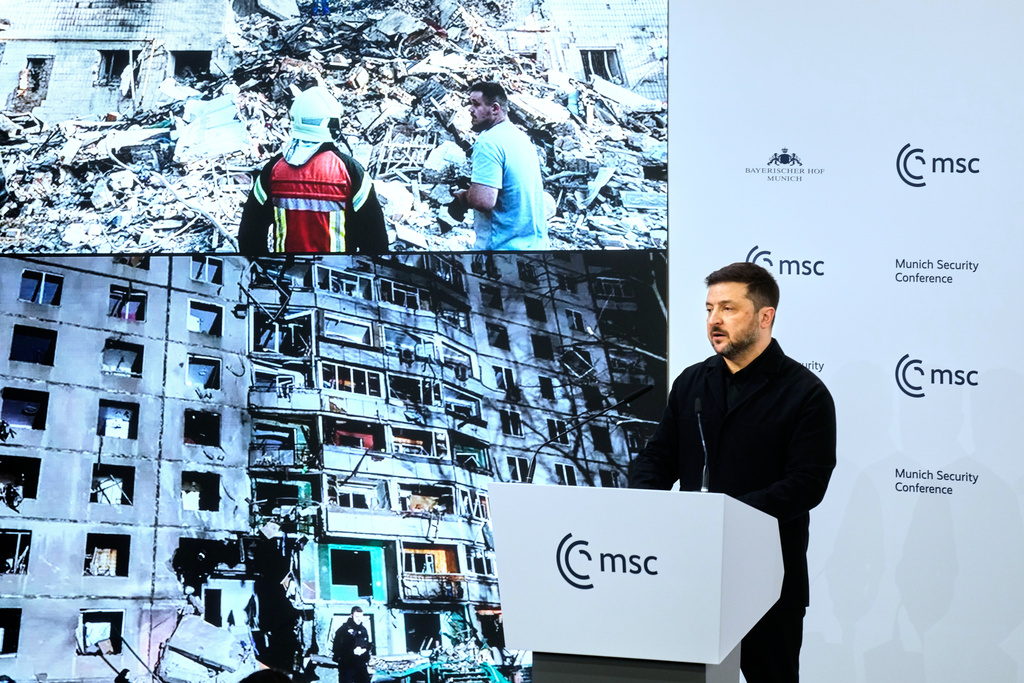
Alongside the diplomatic debates, the Russia-Ukraine war still rages on. Ukrainian President Volodymyr Zelensky, also in attendance, was perhaps the most fervent advocate for Western cooperation. “Russia invests in breaking unity—between all of us, our unity with you, unity in Europe, unity in the Euro-Atlantic community. Why? Because our unity is the best interceptor against Russia’s aggressive plans,” he said. Zelensky’s speech also pointed to the continent’s Eastern border, which he considers a major problem yet to be dealt with, and reminded attendees that “it is Ukrainians who are holding the European front.”
The conference made it once again clear that European countries have a decision to make: fully lean into the transatlantic security alliance again, or create their own path. Both Merz and French President Emmanuel Macron agreed that a review of the regional security architecture is long overdue.
With more questions raised than answered, the 2026 Munich Security Conference came to a close. International relations are changing fast, but many speeches and debates fell short in answering the one question that lingers in the back of everyone’s mind: but now, what?

Sacha Gyapjas is a second-year MA student in NYU’s International Relations department, focusing on international security and peacebuilding. Originally from Amsterdam, she not only obtained her bachelor’s degree in Liberal Arts and Sciences at Amsterdam University College, but also carries the city’s spirit with her by aspiring to be a determined and compassionate professional in the field of IR. In the past, Sacha has reported on the Dutch creative industry, local news in Amsterdam, and written several pieces on social issues.