The Left’s Blind Spot on Iran
For months, Iranians took to the streets demanding economic relief and political freedom, facing brutal repression while much of the Western left dismissed their struggle as a fabrication by Western powers to justify intervention. After the U.S.-Israeli strike that killed Iran’s Supreme Leader Ali Khamenei, the conversation risks shifting once again away from Iranian grievances. This moment demands neither celebration of foreign intervention nor denial of Iranian resistance.
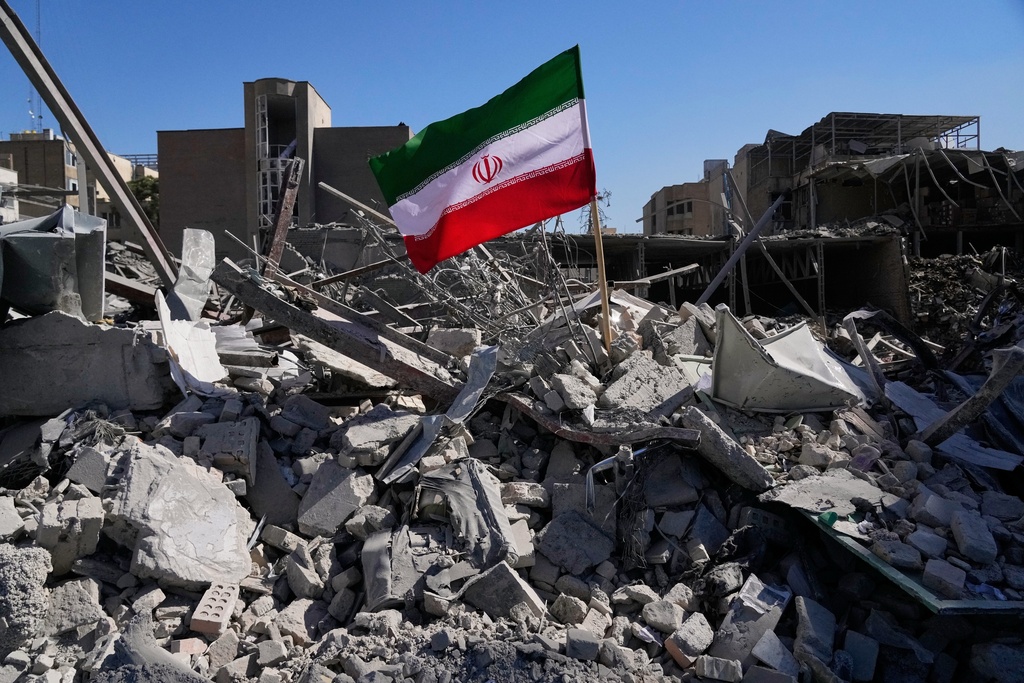
An Iranian flag is placed among the ruins of a police station struck Monday during the U.S.–Israeli military campaign in Tehran, Tuesday, March 3, 2026. (AP Photo/Vahid Salemi)
Throughout January, thousands of protesters took to the streets after shopkeepers in Tehran’s Grand Bazaar shut their stores in protest over the tanking economy. In response, the Iranian regime maximized oppression. Security forces met protesters with lethal force, deploying firearms and prohibited weapons while carrying out mass shootings, arbitrary detentions, and executions—particularly of religious and ethnic minorities. The U.S.-based Human Rights Activists News Agency (HRANA) reported the deaths of 6,000 protesters, while Norway-based Iran Human Rights estimated the toll could have exceeded 25,000.
Amidst such conditions, the U.S. and Israel cheered on protestors, expressing supposedly genuine concern for freedom. Israeli Prime Minister Benjamin Netanyahu stated that “Israel was closely monitoring developments in Iran,” admiring protestors for “immense bravery,” and “their aspirations for freedom.”
Following a breakdown in talks, U.S. President Donald Trump and Netanyahu launched a joint U.S.-Israeli attack against Iran on Saturday, killing Supreme Leader Ayatollah Ali Khamenei. President Trump announced what he called “major combat operations” that are “massive and ongoing” in Iran, with both leaders suggesting that regime change was now the objective.
The Left’s Response
The operation triggered immense anti-interventionist backlash from Western leftists—and rightfully so. Many see U.S. and Israeli interests in the region as extending beyond any genuine concern for Iranians. Rather, Trump and Netanyahu appropriated the opportunity created by the protest movement of a destabilized regime to settle personal grievances. While the two leaders’ justification centered on Iran’s nuclear program and the regime’s support of proxy groups, including Hamas, neither provided evidence of an imminent threat that would permit a pre-emptive strike. Notably, the attacks came after a week of U.S.-Iran negotiations over the country’s nuclear program, raising serious questions about their true objectives.
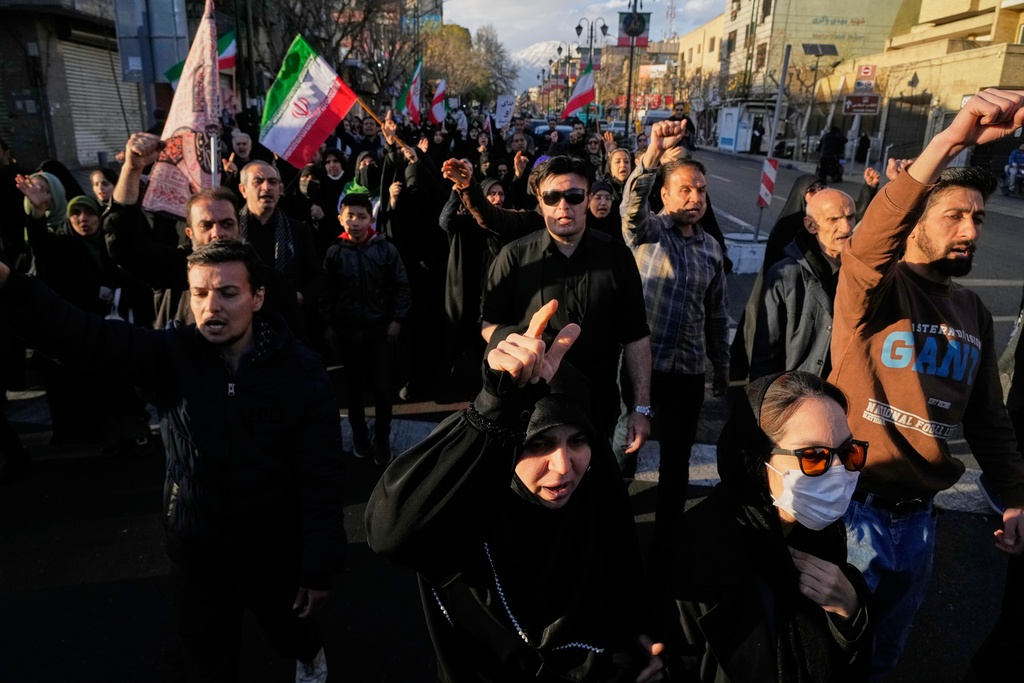
(AP Photo Vahid Salemi)
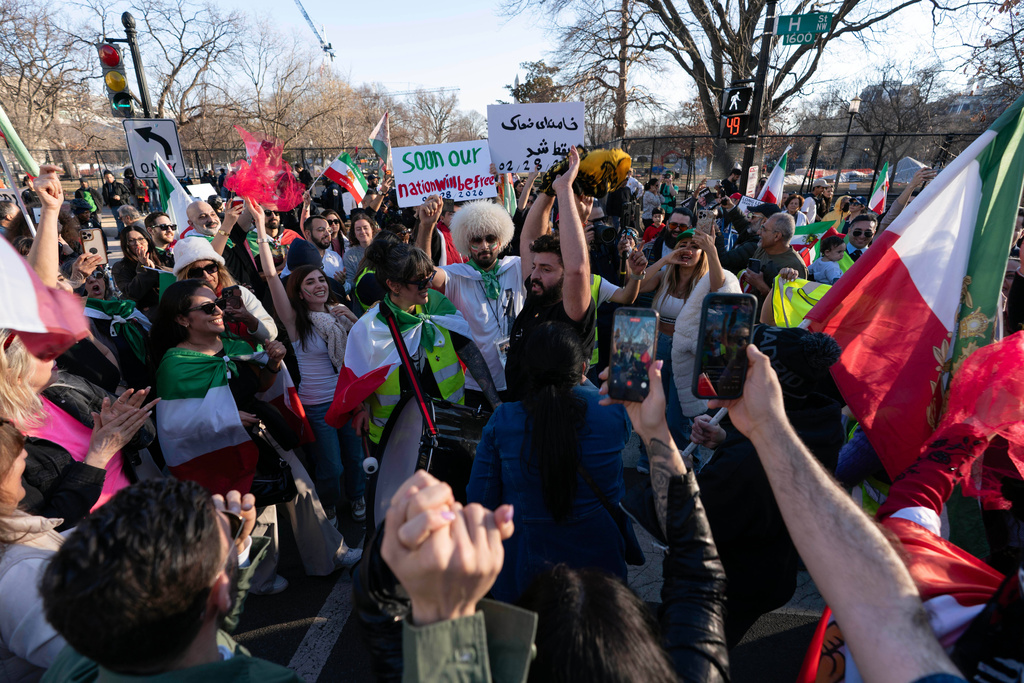
Historically, such strategic interventions have degraded state sovereignty, asserted Western control, and produced chaotic power struggles in which civilians have paid the highest price. It is both unsurprising and tragic that U.S.-Israeli strikes in Iran killed 180 children and wounded many more. Among the casualties are 168 girls killed when a strike hit an elementary school in Southern Iran. While both countries preach their quest for freedom and liberation in Iran, the imminent consequences of intervention are already telling.
Anti-interventionist advocacy was necessary and must continue to ensure that a post-regime future for Iran is shaped by voices from the protest movement, not Washington and Tel Aviv. However, it is equally important to recognize the left’s lack of solidarity with Iranian grievances themselves.
Before the direct attacks, many such anti-intervention perspectives—including prominent Pro-Palestinian activists—went so far as to frame the Iranian opposition to the regime as a strategic fabrication by the U.S. and Israel to justify intervention. Protesters were accused of being “witless tools of an imperialist agenda,” part of a “CIA-Mossad regime change campaign,” or perhaps actual “Mossad agents.” Observers frequently pointed to Iranians waving Israeli flags as supposed “evidence” of direct Israeli involvement in manufacturing the movement. This interpretation rejected the heterogeneity of Iranians, some of whom expressed such symbolism out of their own political views or opposition to the Islamic regime—not because the broader movement was promoted by, or stood in direct solidarity with, Israel. In doing so, Iranians were placed into a convenient category of “puppets” controlled by strategic enemy powers. Activism should not rely on such binary reasoning—one cannot advocate for the freedom of one people while dismissing another by reducing them to extensions of their oppressor. The Islamic Republic, in turn, was insulated from leftist backlash.
Such a narrative outright dismissed a well-documented history of Iranian resistance. The 1999 student uprisings demanding civil liberties, the 2009 Green Movement denouncing rigged elections, and the nationwide “Women, Life, Freedom” protests sparked by the murder of Mahsa Amini for “improper veiling”—all testify to a long history of resistance by the people against the Islamic Republic. Iran’s struggle for freedom never required foreign permission nor should it be in the hands of foreign control.
Centering Iranian Agency
Now, with the conflict enveloping Iran as well as the wider Middle East, it is imperative to raise Iranian voices. The U.S and Israel have already intervened so that Iranians are forged into instability and suffering—concerned with longstanding tensions with the regime over nuclear weapons and proxy groups. Both states are unconcerned with the placement of a democratic regime that addresses the grievances of Iranians, but rather one that succumbs to their interests—an outcome hinted at by Reza Pahlavi, the eldest son of Iran’s last shah, who is already pitching himself as a potential partner for the White House. Therefore, Iranian voices must be elevated so that future governance is determined by Iranians themselves, not by foreign interests.
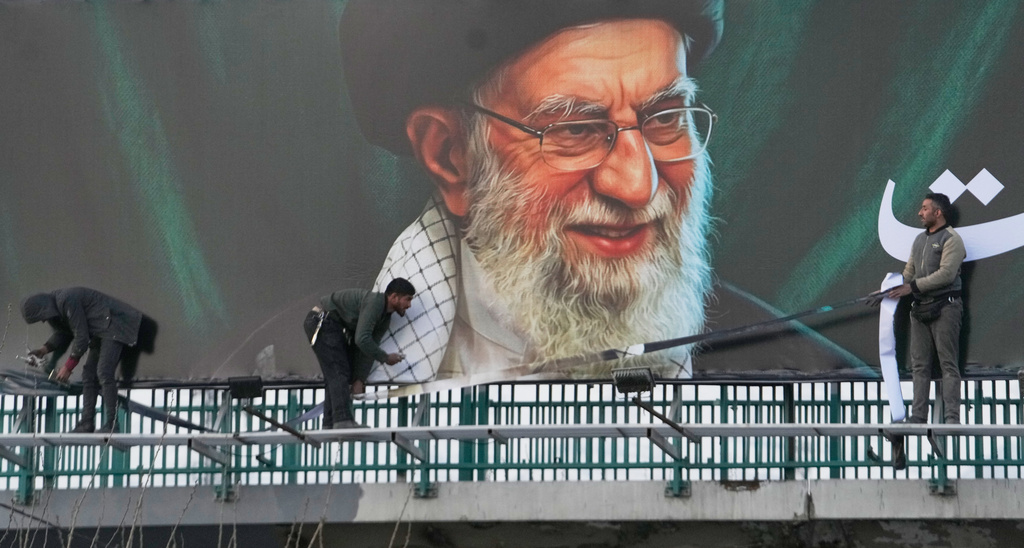
On the other hand, many analysts point out how Khameini’s death may not necessarily mean an end to the regime. Whereas some Iranians mourn the former supreme leader’s death, many others celebrate on the streets what was for them the end of a brutal dictatorship that discriminated against minority and women’s rights. If Western leftists continue to disseminate a narrative that excludes these grievances, they risk sympathizing with Khamenei’s death as a loss imposed on Iran by Western powers. Not acknowledging his abuses condemns Western progressives to losing touch with the reality in the country. While support for Khamenei has existed among Iranians, as leftists, it is integral that we do not dismiss or delegitimize those who have clearly faced human rights abuses. Instead, we should be addressing such grievances in hopes of a democratic regime—one that is shaped by Iranians themselves.
While strong advocacy around de-escalating intervention is essential, it is important not to lose focus on Iranians themselves, and most importantly, their agency over governance, which is the ultimate goal of opposing intervention. Months of accusing such grievances as a mere hoax orchestrated by Western powers have inadvertently reinforced the imperialist gaze by signalling to the Iranian people that they are mere puppets of an imperialist agenda, incapable of claiming agency in their struggle for freedom. We can strongly condemn intervention while still recognizing that thousands have suffered under an oppressive regime and hope for a future with democratic prospects.

Taskeen Tauhid is an undergraduate Politics major with a minor in Journalism at New York University, where she focuses on public policy, governance, and political accountability. She is a Public Policy Intern at Citizens Union, where she researches New York City government ethics, campaign finance, and electoral reform, and contributes to policy analysis and public education initiatives. Previously, she worked as a Reproductive Rights Intern with the League of Women Voters of New York, where she researched state and local reproductive health laws, contributed to policy briefs on abortion and maternal healthcare access, and supported community outreach efforts during the mayoral election. Taskeen also serves as an Associate Editor for the Undergraduate Law Review, reviewing and fact-checking scholarly work on law and public policy, and as an Editor at NYU Zeitgeist, where she leads the editorial review of student commentary.