In ‘The Alabama Solution,’ Punishment Offers No Redemption
This article is part of our 2026 Oscar Documentary Feature Nominee review series.
Lady Justice is the personification of the law, often depicted as a blindfolded woman wielding a sword and the scales of justice. She embodies the promise of a fair, noble, and just law. The Alabama Solution shatters that promise. In exposing the human cost of prolonged unethical confinement, documentarians Andrew Jarecki and Charlotte Kaufman tear away the blindfold and force the audience to witness a system where the rhetoric of justice conceals the machinery of punishment. The film does not simply capture institutional failure; it confronts us with a more disturbing truth: that what we call justice may, in practice, be power unrestrained.
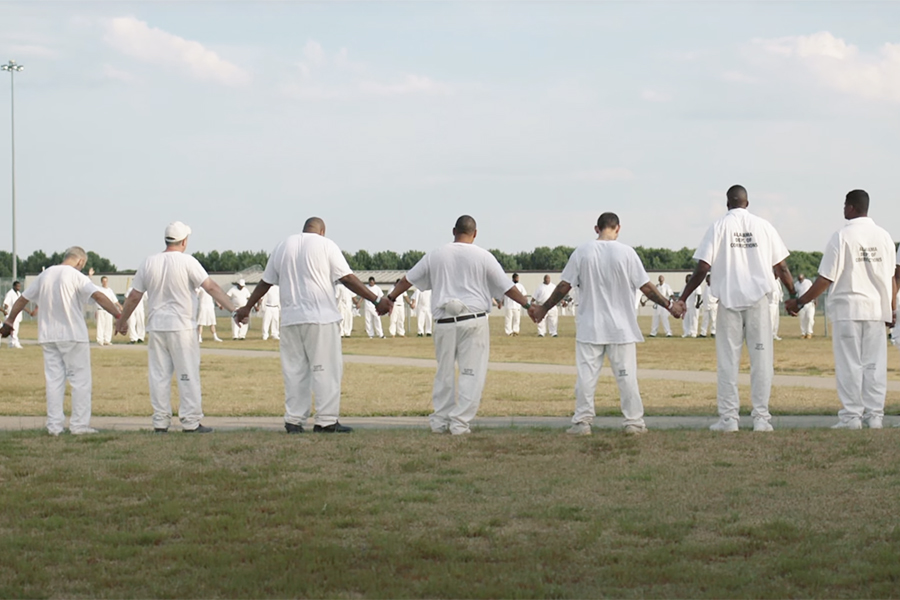
The documentary opens with the deceptive sound of a band playing loud, joyous music. Men dressed in white gather around a barbecue, laughing and socializing. A few inmates are pulled aside for interviews. One casually remarks, “There’s not a lot of hope inside an institution. It has to be brought in.” Nearby, a group prays together, chanting, “I am my brother’s keeper.” For a brief moment, the prison appears almost communal, even hopeful. But the illusion quickly fractures. One inmate quietly adds, “They don’t show you the meat we normally get.”
From there, the camera begins to capture the reality behind the performance. Inmates speak to the side of the frame, explaining that scenes like this are not normal, that the presence of a camera crew has prompted officials to stage a carefully curated version of prison life. They urge the filmmakers to look deeper: to see the overcrowded dorms, to feel the suffocating heat, to witness the beatings, stabbings, and constant violence that define daily life inside. These incidents are routinely covered up and swept under the rug, they say. This moment serves as the film’s cold open. Before the title card even appears, the audience is already aware that the narrative presented by prison authorities is only a facade.
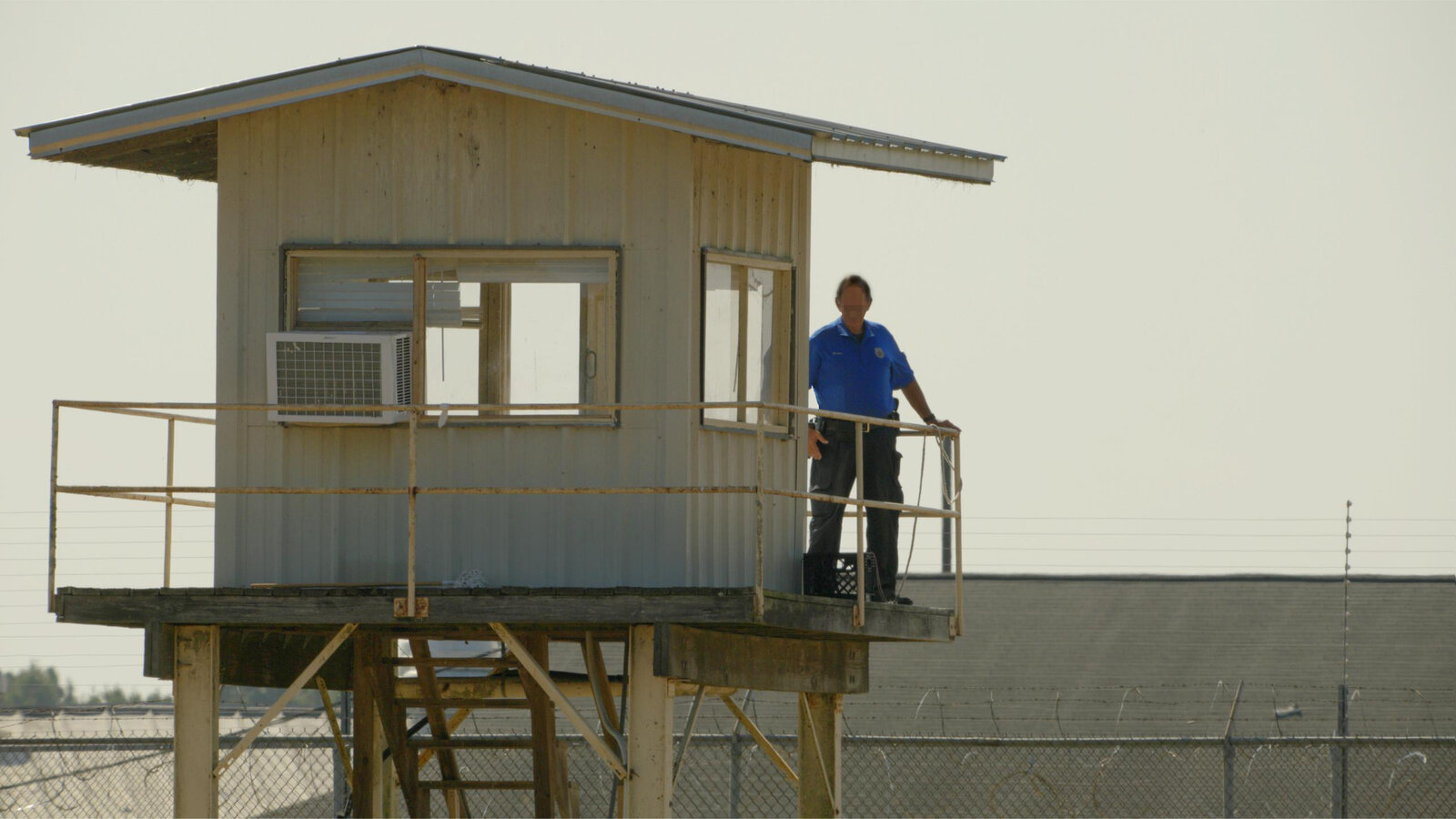
The documentary follows two intertwining narratives. The first centers on incarcerated individuals attempting to expose the conditions within Alabama’s prisons and bring public attention to what they describe as ongoing abuses. The second follows the mother of Stevie Davis, who is desperately trying to uncover what happened to her son while he was incarcerated, an investigation prompted by his sudden and unexplained death.
The story is primarily told through Raoul Poole, Robert Earl—known as Kinetic Justice—, and Melvin Ray. Much of the footage that drives the narrative comes from grainy videos recorded on contraband cell phones. These recordings reveal a prison system that appears less concerned with rehabilitation than with punishment. Violence, neglect, and systemic indifference permeate daily life behind the walls.
In this environment, cell phones become the prisoners’ only lifeline. As one inmate pointedly asks, “How can a journalist go into a war zone but cannot go into a prison in the United States of America?” Without access to outside scrutiny, the men argue, the public is conditioned not to believe those who are incarcerated. Cell phones become tools of documentation and resistance, often the only means by which violence, neglect, and death inside the prison system can be shown to the outside world. The film’s reliance on contraband cell phone footage is not just a narrative device but an aesthetic choice that reinforces its argument. The grainy images and unstable framing mirror the instability of life inside the prison, transforming the camera into an active tool of resistance rather than just passive observation.
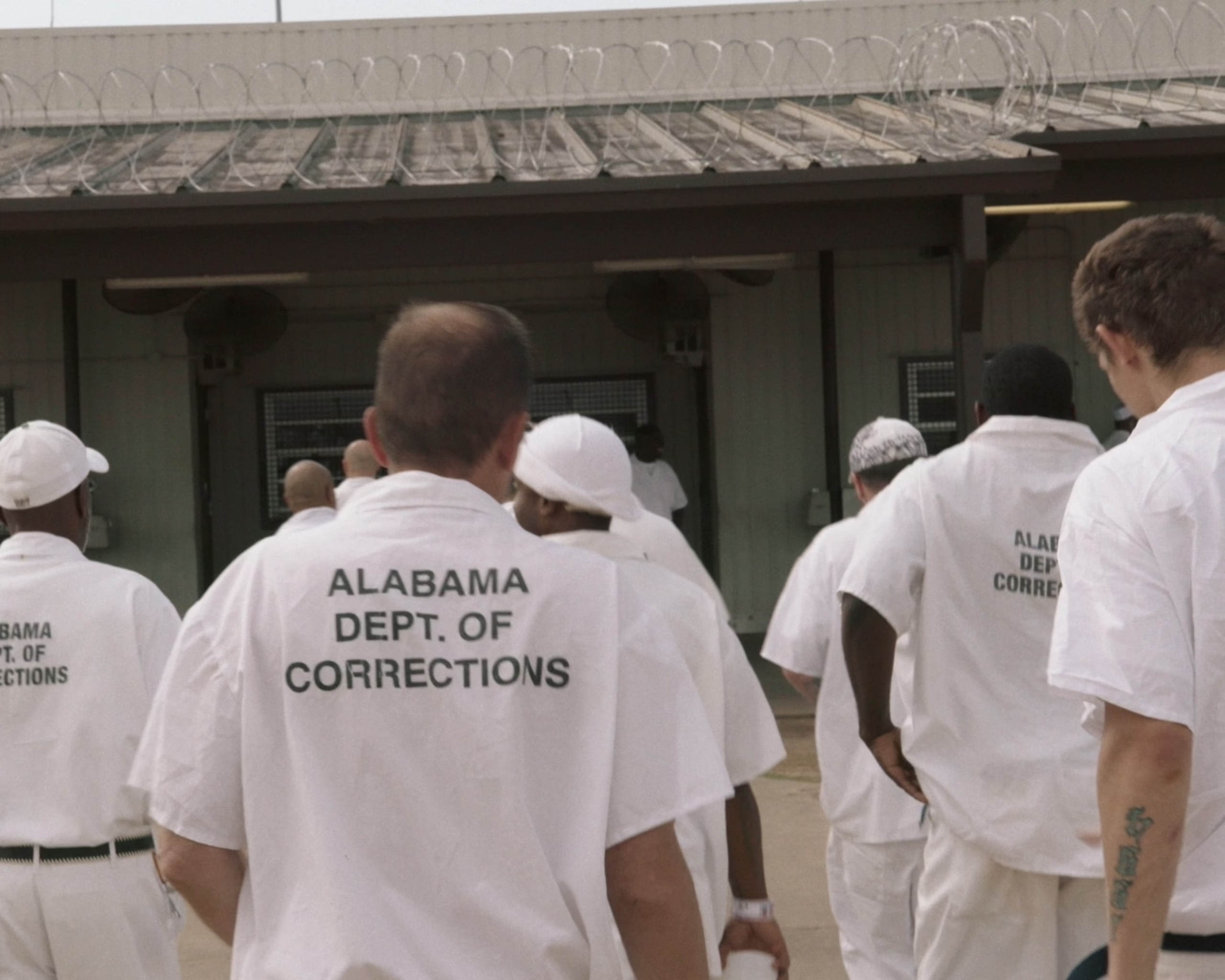
These firsthand recordings are juxtaposed with news clips and statements from Alabama officials, including remarks from the state’s attorney general, Steve Marshall, and Governor Kay Ivey, insisting that “Alabama doesn’t have an incarceration problem, we have a criminal and crime problem.” The contrast is stark. While officials frame the issue as one of law enforcement and public safety, the footage from inside the prisons suggests a system trapped in a continuous cycle of violence and neglect, with little accountability.
The conditions documented in The Alabama Solution are not relics of the past but part of a continuing crisis. Machiavelli warned us: when power is stripped of illusion, it often reveals its most unsentimental and ruthless form. The documentary forces viewers to confront that reality within the American prison system. It does not merely document a crisis; it indicts a society that too often confuses punishment with justice and neglect with rehabilitation. In doing so, the film compels us to question not only what we tolerate, but what we have chosen to call moral.

Isa Lauchengco (she/her) is a first and final-year master’s student in International Relations at NYU, concentrating in International Law. She joined the program through NYU’s accelerated BA–MA track. Originally from the Philippines, Isa earned her Bachelor’s degree in Politics and Philosophy from NYU, and hopes to go to law school in the near future! During her undergraduate years, she was actively involved in campus life, serving as Head Delegate of NYU’s Model United Nations Travel Team. Her academic interests include international diplomacy, particularly the foreign policy and diplomatic relations of her home country, the Philippines, as well as international justice and security, political theory, and the intersection of entertainment and politics. Isa has previously interned with the Brennan Center for Justice and the ACLU, and is currently interning with the United Nations Office of Internal Oversight Services, experiences that have strengthened her commitment to public service. Outside of academics and work, Isa enjoys photography (check out her photography), keeping her Beli account up to date, and reading philosophy books that make her brain hurt. Feel free to connect with her on LinkedIn or Instagram!