The 80th General Assembly will be an Inflection Point for the UN
World leaders gathering in New York this month for the United Nations General Assembly will find an institution enveloped in crises.
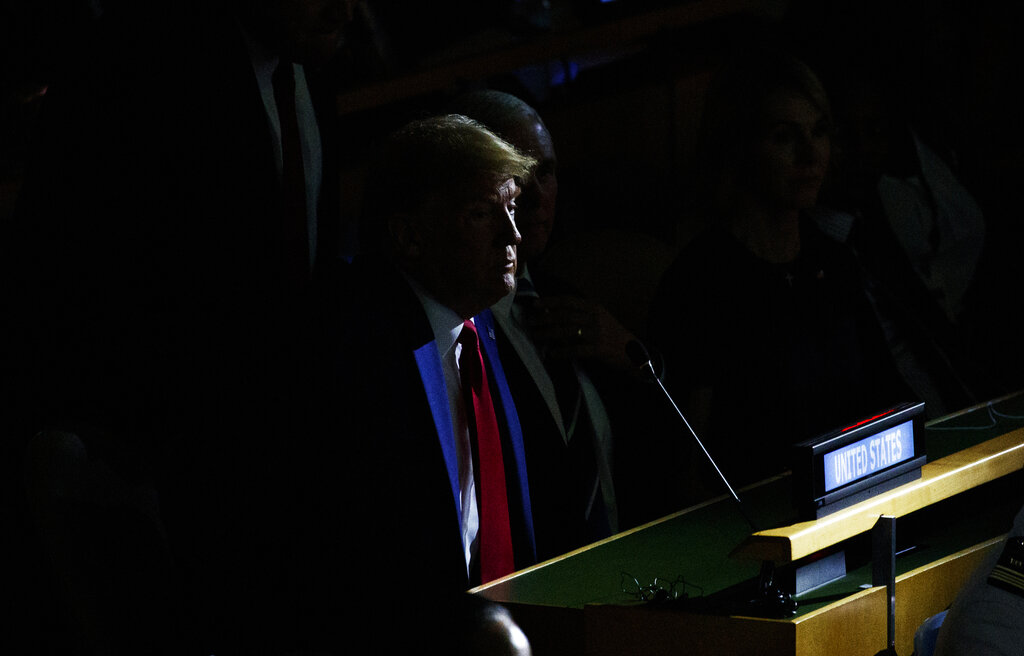
President Donald Trump will address the UNGA again on September 24th. (AP Photo/Evan Vucci)
From Fidel Castro’s four-hour anti-Capitalist tirade in 1960, to Muammar el-Qaddafi’s bizarre 2009 defense of Somali piracy, the United Nations General Assembly (UNGA) brings more than just road closures to New York City each September. The annual gathering of world leaders combines the UN’s drier bureaucratic agenda with the crises of the day—and the many unique personalities that come with it. At the top of that list this year will be the President of the United States, Donald Trump. His spite for international institutions and withholding of financial contributions has shaken the UN at a time when it already faces a crisis of relevance like few others since its founding in the wake of WWII.
Progress on the Sustainable Development Goals (SDGs) ahead of the 2030 target is well behind schedule, while conflict and displacement surge unabated. All of this occurs against the backdrop of a budget crisis in which the US’s arrears are just one of the problems. Secretary-General António Guterres will have to grapple with all of these issues as he marks the UN’s 80th anniversary entering into his final year on the job. He now awaits world leaders in New York with a list of proposed cuts and mergers to reduce the size of the overall budget by up to 20%. The Security Council is marred by gridlock over urgent conflicts in Ukraine, Gaza, Sudan, and elsewhere, which its members either cannot resolve or are directly participating in. Meanwhile, developing states that have grown economically, such as India and Brazil, now seek greater power and influence in a reformed UN. All of this will shape Guterres’s legacy and the next 80 years of global governance.
“These are times of peril” – António Guterres
The Secretary-General’s solution is UN80, an optimistic and aggressive plan to overhaul many inefficiencies within the UN system. Proposed by Guterres back in March, the task force initiative calls for reform on three workstreams: improving efficiency by optimizing processes and reducing costs globally, overhauling the massive and often redundant mandate system, and restructuring an intertwined UN organization. With the objective of making the UN more “effective, cost-efficient, and responsive,” this bold plan will likely see staff pushed out of New York and Geneva to more cost-effective locations amidst a massive shakeup.
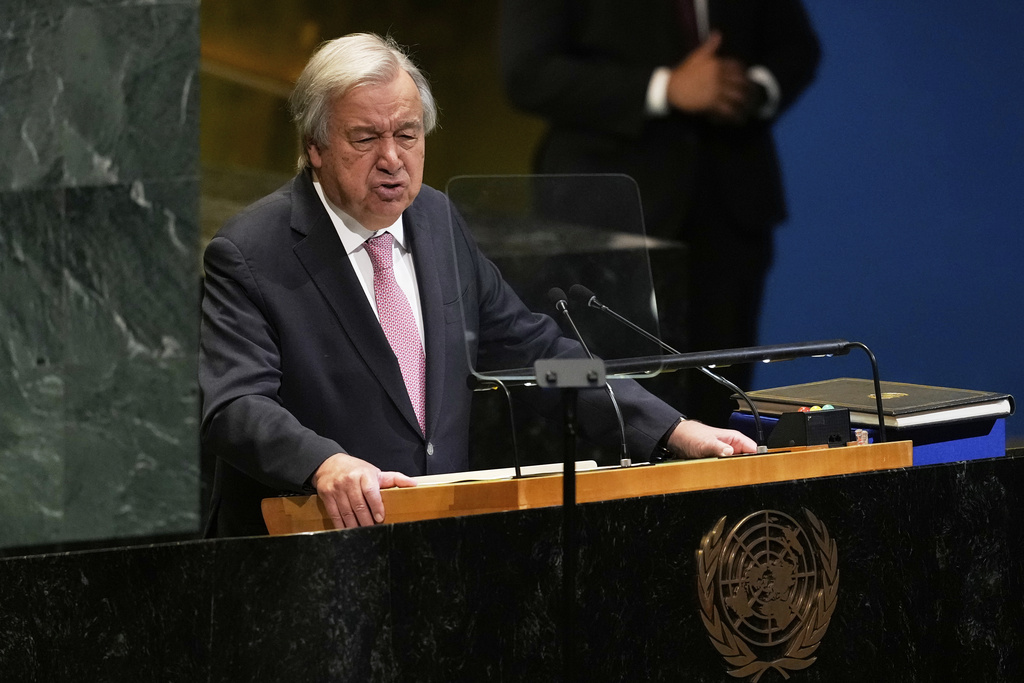
A leaked internal memo described the possibility of large-scale layoffs and mergers, such as combining peacekeeping with other security departments, and joining humanitarian actors UNHCR and IOM. Already, a hiring freeze and preemptive cuts have had a chilling effect over morale in the UN system. It is sure to be a topic of much chatter at UNGA given looming funding cuts to humanitarian emergencies, development programs, and widespread layoffs in country offices not deemed priorities. As Guterres has said, “these are times of peril” and “uncomfortable and difficult decisions lie ahead.”
“Contributions from the US and China alone comprise more than 40% of the operational budget and roughly 50% of the peacekeeping budget”
The organization has become bloated, and member states have not followed through on their financial commitments, creating a 50% budget shortfall for 2025. The US has arrears up to $1.5 billion for the operational budget and $1.2 billion for the separate peacekeeping budget. China has arrears of $587 million. Contributions from these two countries alone comprise more than 40% of the operational budget and roughly 50% of the peacekeeping budget, leaving the organization crippled in their absence. For his part, Trump continues to withhold US funding while his administration conducts a review of its membership in all international organizations, including multiple UN agencies, to ensure they align with his America First agenda. Already, he has initiated an American exit from the World Health Organization, UNESCO, and the Paris Climate Agreement. The review is expected to be completed this month, setting the stage for a confrontational assembly should the US decide to further withhold funding.
The irony is that, despite these challenges, the agenda for High Level Week at the end of September represents a more familiar set of UN policy challenges under the theme “Better together: 80 years and more for peace, development and human rights.” That includes commemorating the Fourth World Conference on Women’s 30th anniversary with a focus on the Beijing Declaration to attain gender equality and empower women and girls. A climate summit will serve as an opportunity for leaders to unveil updated climate action plans per the Paris Agreement in preparation for COP30 in Brazil—a key priority of Guterres’s. To align global financial systems and states to better fund the struggling SDGs and other development priorities, the UN will hold a first-ever Biennial Summit for a Sustainable, Inclusive and Resilient Global Economy. Other key topics on the High Level agenda include preventing non-communicable diseases and promoting mental health, youth issues, regulating artificial intelligence, nuclear nonproliferation, and Myanmar and the plight of Rohingya refugees. Discussions among leaders on more pressing topics will largely play out behind closed doors.
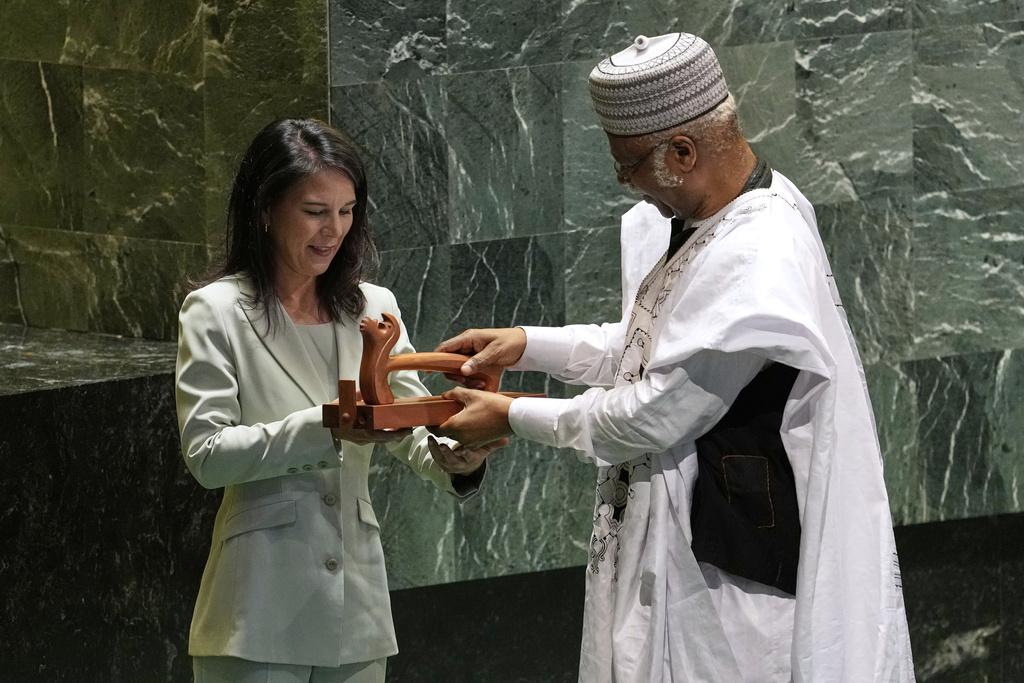
The General Assembly, which already opened on September 9, has a far more extensive public agenda on the urgent matters of international peace and security. This includes the role of diamonds in conflict, situations in Afghanistan and Haiti, prevention of arms in outer space, and a host of other security and legal issues both new and old. Yet, it is the UN’s inability to resolve wars in Ukraine and Gaza that is sure to take on the most attention. The presence of two of the Permanent 5 (P5) Security Council members—with veto power—embroiled in these conflicts has prevented peace in both.
The war in Ukraine nears its 4th year after Russia shattered international law in violating the territorial integrity of another state in its 2022 invasion. Meanwhile, the US continues to support Israel’s war in Gaza, which has resulted in famine and mass human rights violations. Just this week, a UN Independent Commission of Inquiry concluded that Israel’s actions constitute a genocide, crucially demonstrating intent by the government “to destroy, in whole or in part, Palestinians in the Gaza Strip as a group.” Israel has rejected the report as “distorted and false.” Yet the war’s impact on regional instability has been severe. In June, the US was drawn into Israel’s unprecedented war with Iran, and just last week, Israel bombed Hamas’ political leadership in Qatar.
As the P5—more specifically, the US and Russia—have proven their unwillingness to resolve these conflicts, it can be expected that substantial pressure will arise from the General Assembly. Member states, particularly the Group of 77 (G77) non-aligned, developing states, have long been pushing for ways to claim greater influence, while the remainder of the Security Council grows tired of inaction.
Talks on Ukraine have largely stalled since Trump’s irrelevant Alaska summit in August with Vladimir Putin failed in all aspects except granting legitimacy to a Russian president with an outstanding arrest warrant from the International Criminal Court. While the US is notably not a signatory to the Rome Statute, the action stood in stark contrast to its many European allies that are. Trump’s proposal of land for peace proved unacceptable to Ukraine and the Europeans, forcing leaders from both to scramble to Washington in a show of solidarity. More recently, as the General Assembly began earlier this month Putin launched his most aggressive drone attack on Ukraine with some aircrafts venturing into Poland—an EU and NATO member state—in a reckless act that risked widening the war. It is unlikely that Putin will return to the US for UNGA, but Foreign Minister Sergey Lavrov’s presence is sure to be contentious. As a result of this lack of progress for peace, the conflict is likely to drag on and it should not be expected that any breakthroughs will come out of New York.
Similarly, the war in Gaza increases in urgency by the day, yet here, there is a slight possibility for news-making at UNGA. From March to May, Israel restricted humanitarian aid to civilians, with only minimal assistance entering thereafter. In early September, just days ahead of UNGA, Israel commenced a new ground operation to occupy swaths of Gaza. Amidst frustration at these actions, France and Saudi Arabia put forth “The New York Declaration on the Peaceful Settlement of the Question of Palestine and the Implementation of the Two-State Solution” in an attempt to end the war, return all hostages and establish a Palestinian state. On September 12, UNGA voted overwhelmingly to adopt the nonbinding resolution.
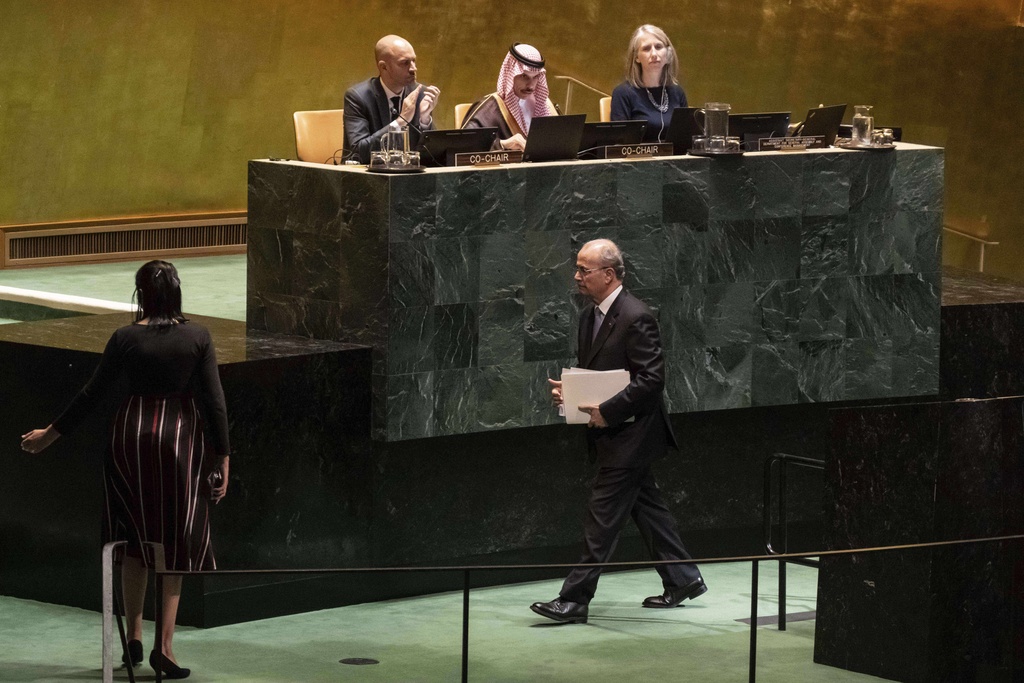
This precedes a summit on September 22, the first day of High Level Week, where at least five states plan to recognize a Palestinian state. Among them are prominent US allies that have historically been supportive of Israel, including the United Kingdom, France, Canada, Australia, and Belgium. While notable politically, state recognition of Palestine is not the same as recognition in the eyes of the UN, where it currently holds the status of a non-member observer state. For that to occur, approval by the Security Council is necessary, along with a vote in the General Assembly. The chances remain slim-to-none given the US veto, but Palestine could still apply regardless, as in its 2011 failed bid. The possibility of which seems even more distant given Trump’s revocation of visas for some in the Palestinian delegation in a rarely used American ploy that breaks with its bilateral agreement as host to the UN. But still, while this may further divide the US from Europe, Trump could instead consider using it as leverage in light of his frustrations over the Israeli government’s latest actions.
“If the UN is to survive for another eight decades, it must find ways to evolve and address the core issues for which it was founded“
The UN’s 80-year history has numerous achievements to count on. But if the institution is to survive for another eight decades, it must find ways to evolve and address the core issues for which it was founded. Results in human development and peace must be apparent if the UN is to maintain the buy-in from member states. That means effectively preventing and resolving conflict, and advancing humanity out of poverty to a future of equality and progress.
The “Better together” theme suggests the importance of unity in a moment where the current global framework has fractured. But as Castro and Qaddafi demonstrated, the UN exists because of a shared disunity. A reformed institution must be able to overcome the disagreements of its member states to ensure peace and human development. It is not enough for world leaders to simply gather once a year for 193 (supposedly 15-minute) floor speeches. For the UN to reclaim its relevance, it will require real structural changes and meaningful progress on the considerable crises facing the world today. The future of global stability is counting on it.
This article has been edited by Maya Nir and Pau Torres Pagès

Benjamin Larned is a second-year MA International Relations student at NYU concentrating in International Law. He received his BA in International Studies with a Minor in History from Old Dominion University. A career humanitarian, Benjamin has supported responses for the Rohingya refugee crisis, Syrian refugee crisis, post-ISIS reconstruction of Iraq, and the 2023-24 Israel-Hezbollah war in Lebanon. His areas of focus include humanitarian crises, US foreign policy, and the trans-Atlantic alliance.