This Is How Football Became a Tool of Modern Imperialism
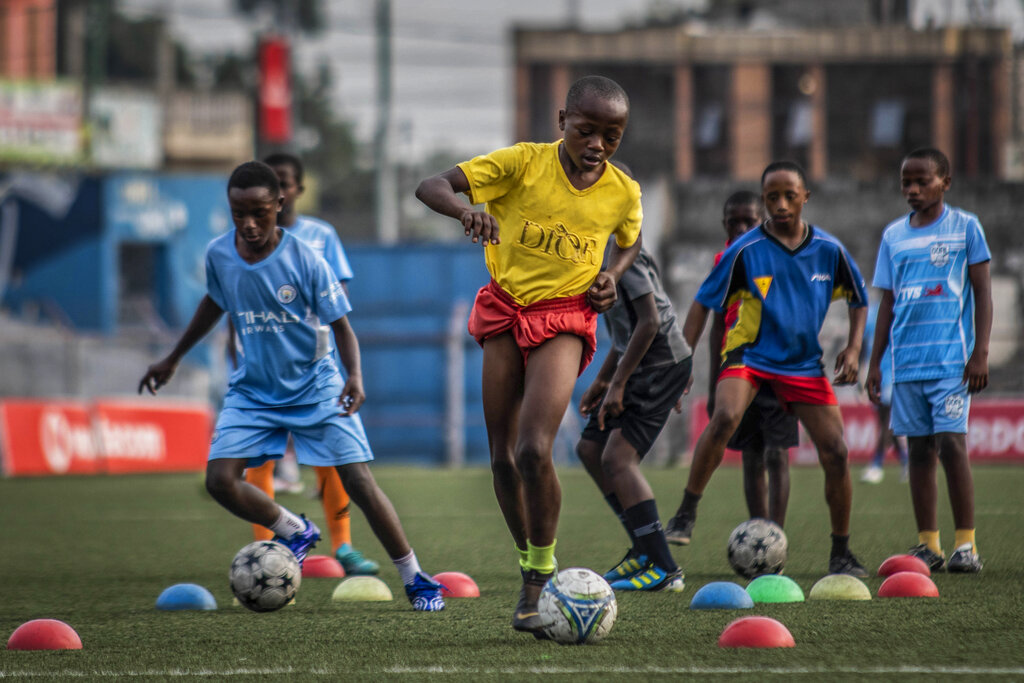
Children in a football training session in Goma, Democratic Republic of Congo. (AP Photo/Moses Sawasawa)
More than 150 years after the abolition of slavery, human trafficking persists—just in a different form. Two centuries later, European powers plundered Africa, exploiting its people and resources. In the 21st century, football follows the same pattern: African players are the new “exports,” lured to Europe by agents with dreams of becoming the next Mané or Diallo, only to be discarded by the ruthless football system. Many end up as undocumented migrants or cheap labor, while FIFA and European clubs rake in billions, leaving African football impoverished and marginalized.
Has football’s globalization truly fostered fair competition, or is it just another form of sports imperialism?
African players, exploited ‘exports’
African talent is indispensable to European clubs. At the 2018 World Cup, 15 out of 23 players in France’s championship-winning-squad were of African heritage. Yet, while these players brought glory to France, their home countries saw little benefit. A 15-year-old African player might be taken to Europe for tens of thousands of euros, but if he succeeds, his transfer fees could reach tens of millions, profits that the African clubs that trained them will never see.
This mirrors colonial rule: European clubs exploit African talent through local agents, acquiring players cheaply and selling them at high prices. Each year, 15,000 African players move to Europe, yet only 1% reach the top leagues. While a few stars are held up as proof of opportunity, the vast majority are discarded, left without legal status, financial security, or support, with some even falling victim to human trafficking. In July of this year, for example, Ghanaian police rescued seventy-six young men trafficked to Nigeria under a fraudulent football-recruitment scheme. Promised places in foreign academies, they were instead confined to overcrowded rooms, stripped of their documents, and coerced into extorting money from their families. This system isn’t just about athletic competition; it’s a capital-driven market. Football is now ruled by extreme economic liberalism: free-flowing talent benefits only the wealthiest clubs, while weaker economies remain passive suppliers of resources.
FIFA, the greedy broker of global football
Europe’s pillaging of African talent appears to be the natural workings of the market, but in reality, it is the result of a broken global football governance system. If FIFA genuinely cared about players’ rights, it would have enforced stricter regulations long ago. Instead, it has actively enabled football’s growing inequality.
In 2001, FIFA introduced the Regulations on the Status and Transfer of Players, banning the international transfer of under-18 players to prevent them from being taken to Europe and abandoned. But this rule is now effectively meaningless. European clubs bypass it by setting up “training academies” in Africa—such as those run by Spanish club Barcelona or Portugal’s Benfica—where players are technically registered with local clubs but are entirely controlled by the European institutions.
Worse still, in 2015, FIFA abolished its agent licensing system, leaving player representation virtually unregulated. Previously, agents needed FIFA certification to negotiate contracts; now, anyone can claim to be a “player agent.” This deregulation has led to a flood of unlicensed middlemen, further exposing African players to exploitation. Without exams, background checks, or clear accountability, many of these intermediaries deceive families with false promises of trials abroad, seize travel documents, and abandon players once payments are made. FIFA, the governing body of world football, has chosen to turn a blind eye.
It is true that FIFA has invested in African football through programs like the Goal Programme, aimed at developing local infrastructure. However, FIFA’s investments in Africa often amount to symbolic gestures rather than meaningful development, with many funded projects abandoned due to poor management and lack of oversight. FIFA’s corruption is not incidental—it is systemic. From the 2015 bribery case to the cash-for-votes dealings in World Cup bidding, this organization functions more as a broker for global football capital than as a guardian of fair competition.
21st-century football, a game of money and power
Football’s global market is worth hundreds of billions of dollars. The 2022 Qatar World Cup alone had a commercial value exceeding $32.7 billion, reaching nearly 5 billion people worldwide—62.5% of the global population. Yet, despite this immense economic power, the real beneficiaries remain European and Western capitalists, not the nations supplying the talent.
In 2021, the English Premier League’s broadcasting revenue alone reached £5 billion, while the combined value of all African leagues was less than £1 billion. Global football promised “world-class competition” and “better market opportunities,” but in reality, it has facilitated the expansion of European capital while commodifying developing nations. FIFA, European clubs, and corporate sponsors control global football’s wealth distribution, while Africa, Latin America, and Eastern Europe remain mere resource suppliers.
Football’s commercial exploitation extends beyond the pitch. During the Qatar World Cup, thousands of migrant workers labored under extreme conditions. At least 6,500 workers had died since Qatar was awarded the tournament in 2010, according to reporting from The Guardian. Whether players or laborers, football’s hyper-commercialization has placed profits over human rights.
Football should be about fairness, not exploitation. FIFA and European clubs must take responsibility—whether by reinstating agent regulations, investing in African player protections, or ensuring local leagues benefit from talent development. Without real reforms, global football will remain an empire built on broken dreams.

Zian Li is a second-year graduate student whose work explores power, accountability, and inequality in global governance and development ethics. She previously worked with academic and nonprofit initiatives on institutional reform and transnational policy.