Cuban Soldiers Fighting for Russia Further Strains US-Cuba Relations
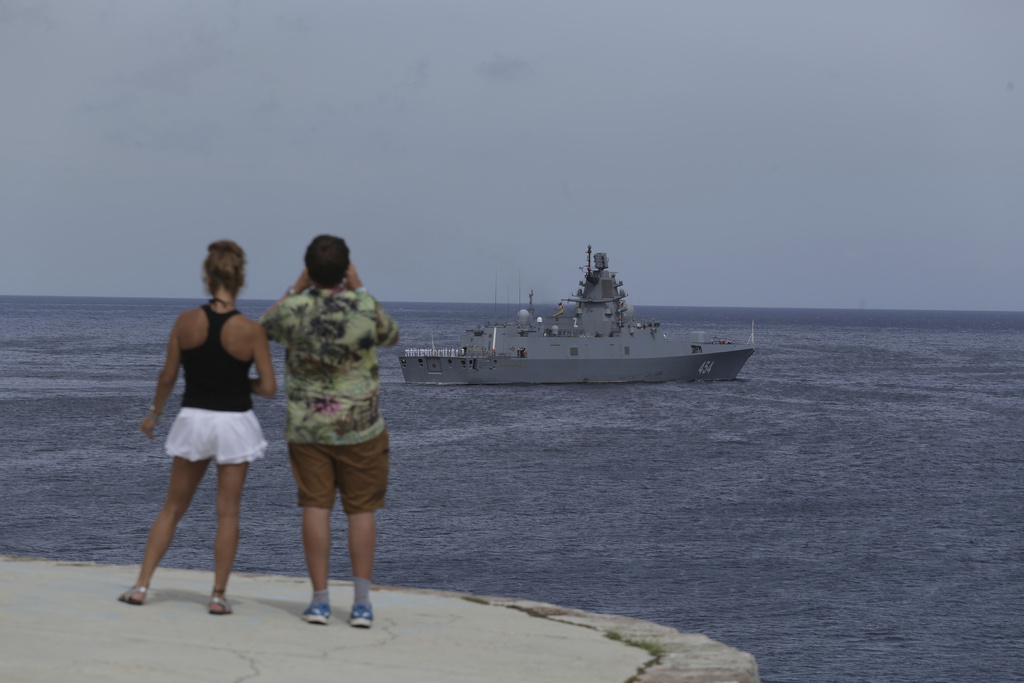
The Russian Navy's Admiral Gorshkov frigate leaves the port of Havana, June 17, 2024. (AP Photo/Ariel Ley)
Reports emerged in Sep. 2023 regarding Cuban fighters supporting the Russian war effort in Ukraine when the Cuban government announced it had exposed a Russian- based trafficking operation used to lure Cubans into military service. While condemning the recruitment operation, the Cuban government emphasized the country is not party to the conflict in Ukraine and does not wish to appear “complicit in these actions.” The investigation resulted in the arrest of 17 individuals on charges of human trafficking, including the “internal organizer of these activities” who allegedly relied on two contacts residing on the island to recruit Cubans as mercenaries for Russian forces in Ukraine. The discovery of the recruitment scheme came on the heels of Russian President Vladimir Putin signing a Nov. 2022 decree allowing foreigners to sign up for service in the Russian army and receive citizenship via a fast-track procedure.
Why Take the Risk?
Extreme economic difficulty in Cuba is the primary driver for men of all ages who leave their homes and families, seeking better opportunities. Unfortunately, according to Politico, not all recruits seem to know what they are getting themselves into. Many are promised non-combatant roles, such as drivers or construction workers, only to find themselves on or near the front lines in combat. The Russian regime has taken advantage of Cuba’s economic crisis and exploited the desperation many citizens feel. Recruiters reportedly offer potential soldiers $2,000 per month, Russian citizenship, and 15 days of vacation every six months, although it is reported that these promises have been inconsistently honored. It is also alleged that the Russian and Cuban governments reached an agreement that allows the Cuban government to hold between 75 and 95 percent of the soldiers’ income. With the average Cuban salary equivalent to approximately $16 per month, the financial incentive for recruitment is substantial.
The Intelligence Directorate of the Ukrainian Ministry of Defense (GUR) estimates nearly 20,000 Cubans have joined the Russian army since 2022, allegedly with the knowledge of the Diaz-Canal administration. Current estimates are that between 6,000 and 7,000 Cubans are on the battlefield. Despite their ongoing protestations and denials, most believe “there is no doubt that the Cuban regime is actively participating in the war against Ukraine, facilitating the active recruitment of mercenaries, and sending its own security troops.” A report by the Ukrainian legislative assembly estimated 40 percent of the Cuban recruits are part of the government’s military apparatus. Members of the Ukrainian parliament believe the number of Cuban troops could reach at least 25,000, potentially surpassing North Korea as the largest contingent of foreign troops in Russia.
The Cuban Relationship with the United States
To best understand how Cuban fighters supporting Russia in Ukraine affects the geopolitical relationship with the United States, some historical context is essential. The relationship between the United States and Cuba became tenuous during the Cold War, when Fidel Castro’s 1959 revolution deposed U.S.-backed President Fulgencio Batista. Relations worsened as Castro established a communist government and forged a trade alliance with the Soviet Union, nationalizing all foreign assets in Cuba and raising taxes on all United States imports. Castro’s actions prompted President Dwight D. Eisenhower to impose a near complete trade embargo and sever all diplomatic ties. President John F. Kennedy continued United States policy towards Cuba, isolating the island nation through comprehensive economic sanctions, including an expanded embargo on trade and financial transactions. The Foreign Assistance Act of 1961 (FAA) authorized the President “to establish and maintain a total embargo upon all trade between the United States and Cuba.”
The ill-fated April 1961 Bay of Pigs invasion, intended to overthrow the Castro government, led to closer military ties between Cuba and the Soviet Union, which reached a major flashpoint in October 1962 when U.S. reconnaissance discovered Soviet nuclear missile sites being constructed on the island. This discovery led to a blockade of Soviet ships bound for Cuba and a deal between the United States and the Soviet Union to remove the weapons.
Alleged ties to international terrorism led to Cuba being classified as a state sponsor of terrorism by President Ronald Reagan in 1982, censuring Castro for providing support to militant communist groups in African and Latin American countries. The collapse of the Soviet Union led President George H.W. Bush to tighten sanctions in 1992 in an effort to keep other nations from filling the vacuum created by the loss of Cuba’s largest benefactor.
In addition to the ties to the Soviet Union and sponsorship of terrorism, years of human rights abuses, including suppression of speech, and persecution of political opponents, led to Cuba being classified as a rogue state. While many have argued that the rogue era ended with Fidel Castro, this assessment remains contested.
An Era of Softening Ties
In Feb. 2008, Fidel Castro announced he would no longer serve as Cuban president due to health issues and officially handed over power to his brother Raúl. The announcement drew hopeful responses from President George W. Bush and 2008 Presidential candidate Barack Obama who both proclaimed United States support for the new regime and Cuban people. Soon after taking office, President Obama proclaimed, “the United States seeks a new beginning with Cuba,” and lifted all restrictions on family travel and remittances. As talks and negotiations progressed, President Obama stated, “the notion that the same policies that we put in place in 1961 would somehow still be as effective as they are today in the age of the Internet and Google and world travel doesn’t make sense.”
While relations were thawing and progress was being made to normalize relations, the 2012 report on state sponsors of terrorism still listed Cuba, although the report found “no indication that the Cuban government provided weapons or paramilitary training to terrorist groups.” Inclusion on the state sponsor of terrorism list subjects countries to economic and political sanctions, including exclusion from aid from the International Monetary Fund (IMF) and other major financial institutions. Geoff Thale, program director at the Washington Office on Latin America said the report makes it clear that the State Department didn’t believe Cuba was a state sponsor of terrorism and they were “clearly on the terrorist list for political reasons.”
Cuba was officially removed from the state sponsor of terrorism list in May 2015, triggering the amendment of the Cuban Assets Control Regulations (CACR) in June and the Export Administration Regulations in July. In addition to the travel and remittance restrictions previously lifted, the removal lifted restrictions on trade and telecommunications, banking and financial services, and physical presences of companies and entities in Cuba. The normalization process was underway.
Continued progress led to the re-opening of the United States and Cuban embassies for the first time since 1961. President Obama traveled to Cuba in March 2016, the first U.S. President to visit Cuba since Calvin Coolidge in 1928. Despite ongoing debate about U.S. policy on Cuba and sanctions, steps toward normalization were progressing and expectations rose for the Cuban people and their supporters in the United States.
Policy Reversals Under the Trump Administration
Following Fidel Castro’s death in November 2016, President Obama’s normalization efforts faced uncertainty. President-elect Donald J. Trump stated that “If Cuba is unwilling to make a better deal for the Cuban people, the Cuban/American people and the U.S. as a whole, I will terminate [the]deal.” President Trump reinstated travel restrictions on Americans traveling to and doing business with Cuba in June 2017. On Jan. 11, 2021, he reversed another normalization step by directing the State Department to add Cuba back to the state sponsor of terrorism list, an act that critics characterized as “political opportunism.”
Jan. 2025 marked a particularly volatile period in U.S.-Cuba diplomacy. President Joe Biden re-introduced some of the Obama-era normalization steps by expanding U.S. flights into Cuba, reestablishing the family reunification program, increasing visa processing, and lifting the remittance cap for families. On Jan. 10th, President Biden removed Cuba from the state sponsor of terrorism list and lifted the Trump administration’s sanctions on companies run by the Cuban military. Upon returning to office, President Trump placed Cuba back on the state sponsor of terrorism list and reimposed restrictions on his first day in office. He continued these policy reversals in June by reimposing the ban on tourism, restricting financial transactions, and reinforcing the decades-old embargo.
The return to Cold War era restrictions, sanctions, and embargos on Cuba reflects a policy approach based on the belief that if you punish a country’s people enough, they will rise and force a regime change. Critics argue that this strategy has proven ineffective and raises human rights concerns. Whether the Cubans fighting for Russia are acting as agents of the state or as mercenaries, they are motivated largely by the desire to help their families build a more secure future. Decades of economic hardship have caused many Cubans to take drastic, dangerous steps to improve their circumstances and build better lives for themselves and their families. Some analysts contend that the Cold War-era strategies may prove counterproductive in addressing this phenomenon. According to this view, tightening restrictions could ironically drive more Cubans toward risky recruitment opportunities.
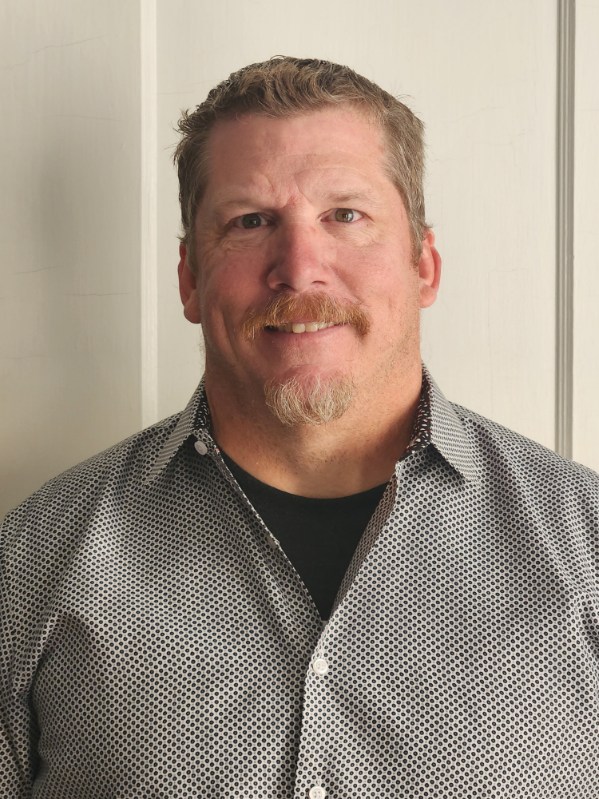
George Orr is an independent researcher/analyst with a Master of Science in Global Security Studies from Angelo State University and a Bachelor of Applied Arts and Sciences, Summa Cum Laude, from Texas State University. George’s research interests include, but are not limited to, civil-military relations, terrorism, rogue states, stability operations, and regional security issues in North Korea, Asia, the Middle East, the Sahel region of Africa, and the southern former-USSR republics.