The Protectionist Paradox
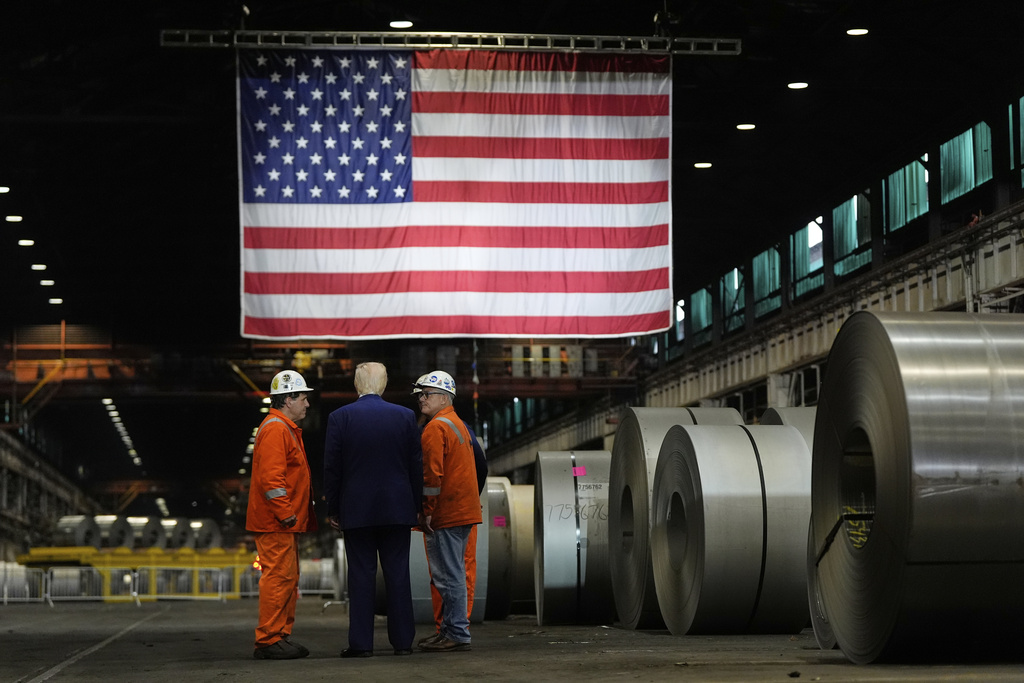
President Donald Trump talks to workers as he tours U.S. Steel Corporation's Mon Valley Works-Irvin plant, May 30, 2025, in West Mifflin, Pa. (AP Photo/Julia Demaree Nikhinson)
The United States has upended the free-trade status quo—a decades-long era defined by largely borderless markets and neoliberal optimism. Its pivot toward industrial protectionism marks a decisive break from the liberal internationalist consensus it primarily established. The shift, although still in its infancy, is unfolding across two consecutive administrations—from President Biden’s CHIPS and Science Act of 2022 to President Trump’s second-term Made in America objectives. Policies from both administrations hope to reverse decades of offshoring by incentivizing firms to relocate high-tech manufacturing infrastructure to the United States. Despite bipartisan support, early data suggest a slow start as the number of Americans employed in manufacturing today remains flat. As technological advancements pave the way for greater adoption of artificial intelligence, automation, and robotics, reindustrialization is poised to be anything but straightforward and to demand innovation in industrial policy.
A Failed Liberal Bet
Theories of liberal institutionalism set forth by scholars Robert Keohane and Joseph Nye have long argued in favor of free trade’s selling points. Specifically, they point to the potential to maximize efficiency through classical economist David Ricardo’s comparative advantage, which has allowed nations to focus on specialization in a positive-sum market within global value chains. Supported by Keohane and Nye’s complex interdependence framework, this liberal proposition argued that trade links would ultimately make military conflict too costly to pursue. However, as globalization critic and American Compass founder Oren Cass notes, this bet has failed because Washington refused to enforce the rules of fair competition, thus permitting adversaries like China to exploit open markets through a so-called “beggar-thy-neighbor” set of policies while the United States allowed the severe erosion of its own industrial base.
American adherence to free trade created urgent trade deficits that standard liberal theory leaves unresolved. For one, the United States has been stripped of “strategic depth”—the ability to absorb and recover from economic threats—leaving its military and economy dependent on rivals for essential technologies like microchips. Additionally, and even more critically, deindustrialization results in major domestic instabilities with societal costs that include job loss and wage decline, family violence and breakdown, decreased trust in government and social unrest, and increased rates of depression and suicide.
The Constraining Dissensus
Addressing vulnerabilities at the domestic level requires more than a pivot in economic policy but an acknowledgement of a new political reality. The era of what political scientists Liesbet Hooghe and Gary Marks call the “permissive consensus”—whereby elites could pursue globalization without public scrutiny—is over. Success now depends on the mitigation of the constraining dissensus.

This theoretical framework explains the American political landscape of today. For instance, globalization’s losers in the Rust Belt are driven not just by economic grievances (distribution) but by lost national community and sovereignty (identity). Through the politicization of these grievances, political entrepreneurs, as Stefanie Walter describes them, have mobilized a backlash that makes neoliberal free trade an electorally toxic endeavor. This creates a paradox: while the public demands economic sovereignty, they often reject the necessary premiums—higher consumer prices and tax-funded subsidies—required to build it.
This paradox threatens the durability of ambitious new alliances, such as the “Pax Silica” initiative. For this United States-led semiconductor bloc to succeed strategically, it must be aligned with a domestic workforce strategy that ensures these geopolitical wins also translate into tangible working-class opportunities, as opposed to remaining abstract victories for the upper echelons of the government alone. Furthermore, domestic volatility signals risk to the international partners needed to make friend-shoring work, undermining the trust essential for long-term foreign investment in the United States.
From Albany to Washington
To remain competitive, the United States must adopt a policy of strategic reciprocity—targeted protectionism aimed at reshoring critical sectors. The New York model demonstrates the potential of this approach. Alongside cooperation with the federal CHIPS Act initiative, proactive market intervention incentivizes an adaptable industrial cluster in alignment with its own Green CHIPS program, which uses protectionist tools like subsidies while securing investment from key partners—foreign and domestic alike—to anchor supply chains in the state.
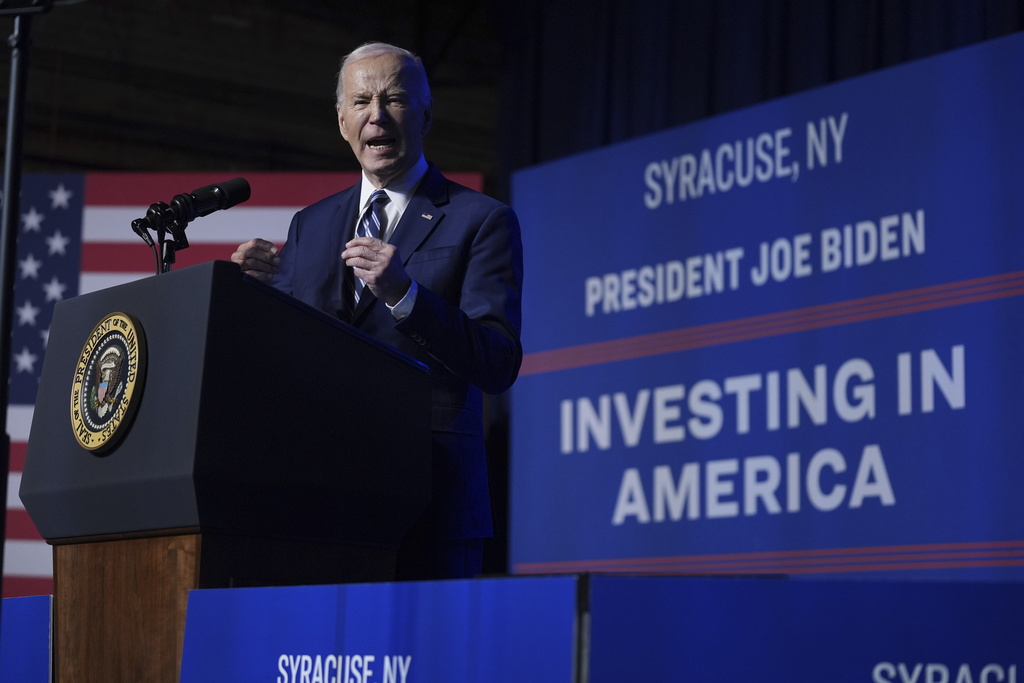
The startup-like nature of CHIPS Act implementation offers a scalable framework for how democratic institutions can approach industrial policy—a model the White House recently adopted with its launch of the United States Tech Force, a recruiting platform meant to accelerate the placement of around 1,000 early-career technical talents in government. However, a true industrial renaissance necessitates a parallel “trade tech force”—one focused not on software engineering but training the skilled technicians needed to maintain the physical infrastructure of the Tech Force’s artificial intelligence objectives, from data center electricians to fabrication plant pipefitters.
As Nikita Lalwani and Sam Marullo note, the CHIPS program hired private-sector experts through expedited authorities to systematically allocate $450 billion in private capital, thereby dismantling the liberal critique that governments cannot select winners. Over the span of less than 3 years, the U.S. went from producing zero advanced logic chips to being projected to produce 20 percent of global supply by 2030.
The Insurance Premium
Proponents of protectionism must acknowledge this early phase. Despite offering crucial stabilization of a domestic constituency’s socio-cultural vulnerabilities, widespread public awareness efforts remain essential to the success of reindustrialization. Strategic reciprocity imposes considerable short-term costs in the form of higher consumer prices, and the challenge for policymakers is to frame these costs as an insurance premium for national and economic security. Given the “economic and social decay” noted by Cass, the American electorate may be receptive, but only if benefits are felt broadly. For such a strategy to truly stamp out constraining dissensus, investment must move beyond the United States’ coastal tech hubs and meaningfully revitalize communities—like St. Louis and Baltimore—that have borne the brunt of globalization’s failures. The decision no longer lies between free trade and protectionism, but managed resilience and unfortunate decline.

Taylor Freeman is an M.S. candidate in Global Security, Conflict, and Cybercrime at NYU’s Center for Global Affairs. His research focuses on economic statecraft and hybrid threats. Taylor previously served as an Intelligence Analyst Intern at US Central Command (CENTCOM) J2 and the Department of Commerce, and as a Research Fellow at Pennsylvania State University. He currently works in external affairs for the City of New York.