Ideological Intransigence on Israel Continues to Overrule US National Interest
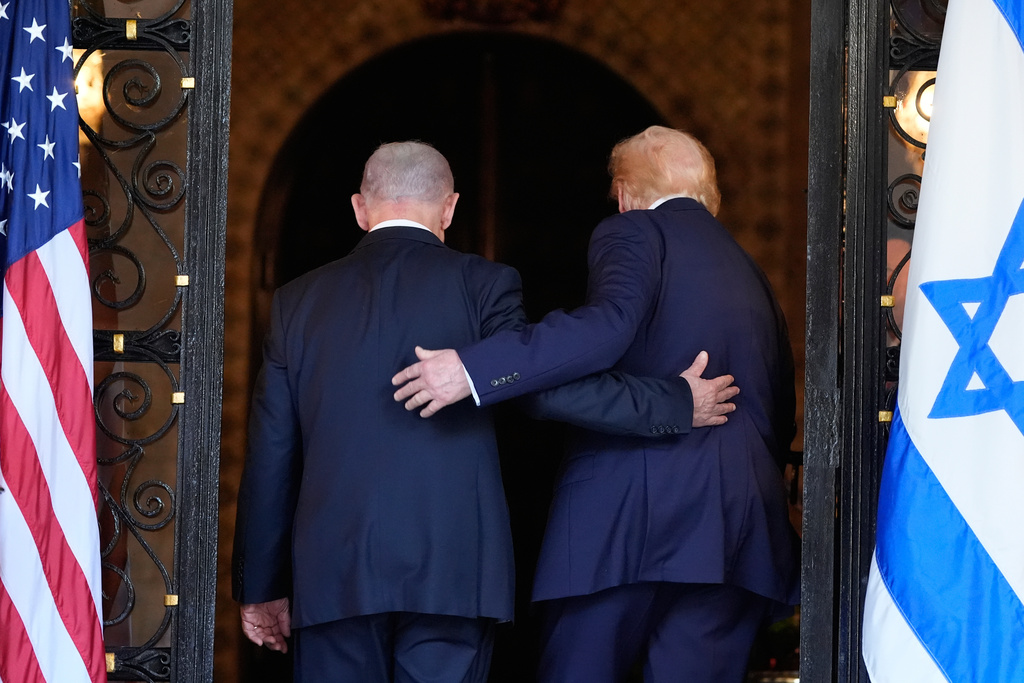
Trump and Netanyahu walk arm in arm into Trump's Mar-a-Lago club in Palm Beach on Dec. 29, 2025. (AP Photo/Alex Brandon)
Israeli settlement expansion and settler violence are increasing. In the West Bank, violence increased by 27% and “severe” attacks by 50% in 2025, according to data from the Israel Defense Forces (IDF). The UN Office for the Coordination of Humanitarian Affairs (OCHA) indicates that “settlers have attacked Palestinians nearly 3,000 times over the past two years,” where they have vandalized Palestinian property, committed arson, and killed residents with Israeli soldiers by their side. Emboldened settler criminality has coincided with an acceleration of settlement construction in the occupied West Bank by Israel’s far-right government, which in 2025 reached its highest levels since 2017, according to the UN. In mid-December, Israel formalized 19 settler outposts in the northeast of the West Bank, an area that has generally gone on without colonization by settlers. Formalization makes them governmentally authorized settlements.
If observers take U.S. President Donald Trump at his word, he apparently disapproves of settlement activity. He has repeatedly opposed Israeli annexation of the West Bank since taking office. Two weeks before the October ceasefire, he stated: “I’m not allowing Israel to annex the West Bank.” A month later, in an interview with Time magazine, he said the U.S. would stop supporting Israel if it went through with annexation. This was quite the bold statement for an American president.
While Trump says he does not want Israel to take the West Bank, he refuses to take the step that would make it difficult for Israel to do so. Shortly before the ceasefire agreement was announced, he also criticized countries in his address to the U.N.’s General Assembly for recognizing the State of Palestine, calling it a “reward” for Hamas. After the ceasefire, Trump gave a speech in the Israeli Knesset declaring that “Israel will always remain a vital ally of the United States of America. Israeli [sic]share our values.” He appointed a Christian evangelical, Mike Huckabee, as U.S. Ambassador to Israel, who said in June that U.S. policy “no longer” supports the idea of a Palestinian state.
Late last year, the U.S. president said that he and Israeli Prime Minister Benjamin Netanyahu do not “agree on the West Bank 100 percent,” but that they “will come to a conclusion on it.” The Israelis seem to have reached a conclusion without him, as the Los Angeles Times reported on Jan. 6 that Israel is set to begin constructing “3,401 housing units” in an area outside East Jerusalem called E1 once it gets bids from developers. This project “would effectively cut the West Bank in two,” according to the Times, further diminishing the prospect of a Palestinian state. The contradiction isn’t new. For decades, U.S. presidents have described Israel as a strategic ally, but the relationship is driven less by strategy than ideology.
A Moral Imperative in Disguise
It is typical for state officials to use morality to justify strategic policies. The U.S. appears prepared to strike Iran as President Trump suddenly pretended to be concerned about the human rights of Iranians. His true goal is to put an end to Iran’s nuclear program. Three days into the new year, the U.S. attacked Venezuela, removing President Maduro and his wife from the country to face trial on “narco-terrorism, conspiracy to import cocaine, and possession of machine guns” charges. While Trump did make it unabashedly clear that he is after Venezuelan oil, the U.S. ousted Maduro by claiming to bring him to justice for allegedly leading drug trafficking activity that has killed untold numbers of Americans.
In these cases, moral reasons were used to justify strategic policies. The same does not apply to U.S.-Israeli relations. The United States touts its special relationship as strategic and a national (security) interest in order to mask the fact that its commitment is actually ideological, or moral, Jerome Slater writes. It is the most bipartisan, unconditional relationship the U.S. has with any country. It is fiercely defended in the face of sound criticism and shielded with a sacrosanctity that keeps the United States in step with Israel on issues of foreign policy even when it is not in America’s interest.
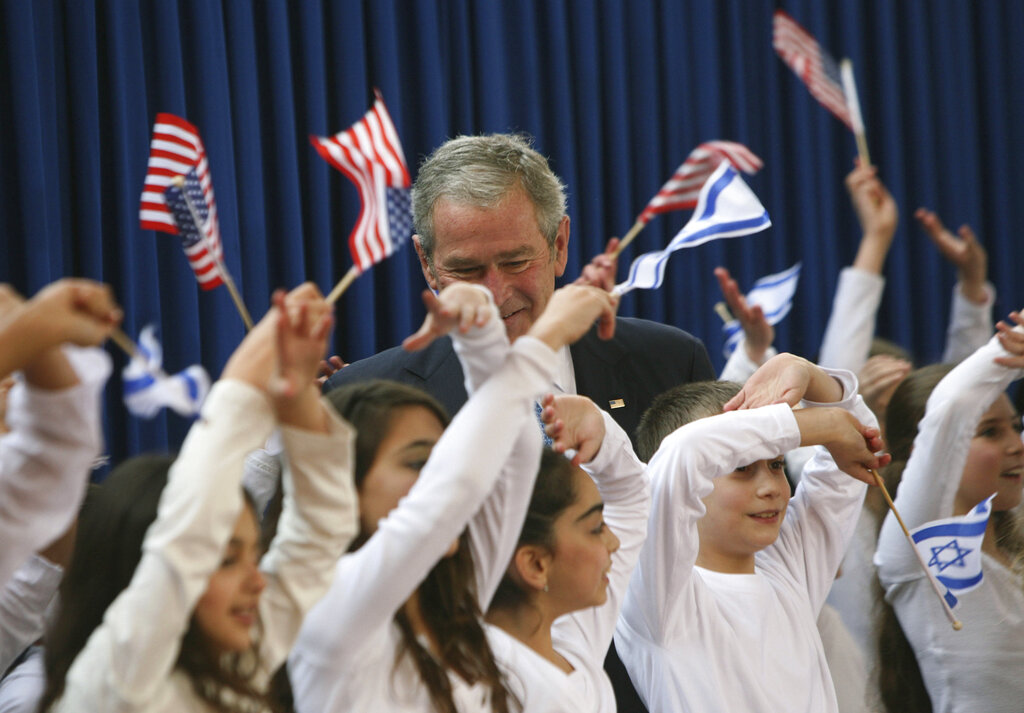
Support for Israel was never in the U.S. national interest. Ariel Sharon and George W. Bush’s ideologies and policies exemplified this, according to Slater. He claims that if the U.S. is allied with Israel because it believes this serves its national interest, then this could not be further from the truth, as the alliance is “far more part of the problem in the Middle East than it is the solution.” He fully recognizes that the problems in the Middle East are only indirectly linked to the U.S.’ unyielding commitment to Israel, but notes that the heavy bias toward Israel certainly does not help. This was in 2002. The same analysis could have been made today.
Israel Fits in US Political Culture
Every U.S. president since Israel’s founding in 1948 has added his own personal layer to the narrative that Israeli and American interests align. Jonathan Rynhold argues that to understand why the pro-Israel lobby even has influence, one has to understand why Israel resonates with American political culture. He writes: “political culture incorporates conceptions of collective identity, conceptions as to the nature of politics (ontology), assessments of what is desirable (values), legitimate (norms) and plausible in the political realm.” American political culture reels in American presidents whose transactional rather than ideological approach to politics would lend them to be less prejudiced in favor of Israel.
A focus on settlements is particularly telling about the U.S. relationship with the Palestinians because the position a president takes on settlements will indicate whether he respects the idea of a Palestinian state. During spikes in Israeli-Palestinian violence, a president may be tough on Israel over its illegal settlement-building in the West Bank because of the urgency it creates about solving a conflict whose root issues have been pushed into a future that never arrives. Or he may use the renewed threat to Israel’s security to tacitly approve of Israel’s illegal encroachment on Palestinian land. The Bush and Biden administrations seem to fall in the former camp, while the Obama and first Trump administrations seem to fall in the latter.
In 2002, Bush became the first U.S. president to support the establishment of a Palestinian state, though he attached strict prerequisites: new leaders, democratic institutions, security guarantees, and the abandonment of terror. Bush also challenged “Israel to take concrete steps to support the emergence of a viable, credible Palestinian state.” He spoke candidly about Israel’s ethnonationalist identity and declared that the occupation must end if that identity is to hold. That is where his criticism ends. From the Palestinians, he demands action, but the Israelis, he offers a challenge.
Two more years into the Second Intifada, Bush thanked Sharon for sharing Israel’s plan to withdraw its military and settlements from Gaza. Bush failed, however, to push him on settlements in the West Bank, writing that the U.S. “welcome[s]” Israel’s withdrawal from some of the West Bank settlements. He claims that because Israel has populated parts of Palestinian territory, “it is unrealistic to expect that the outcome of final status negotiations will be a full and complete return to the armistice lines of 1949.” By 2008, speaking to the Knesset, Bush framed the alliance as inevitable, invoking the American towns of Bethlehem and New Canaan, reinforcing Israel not just as an ally but as part of the American story itself.
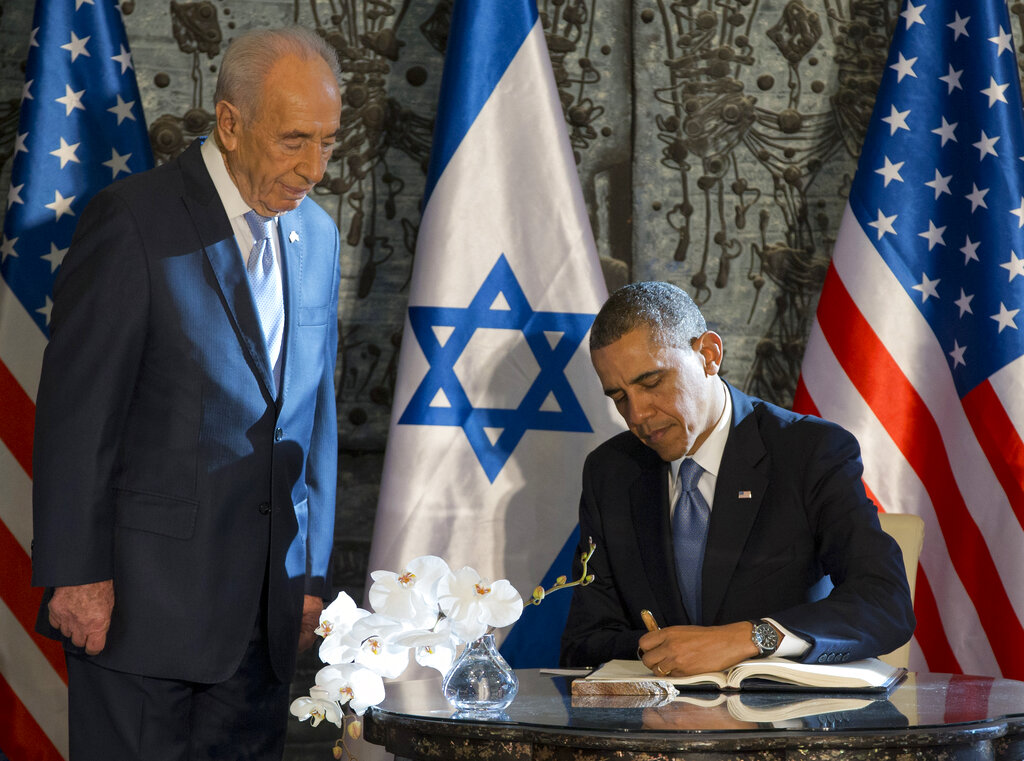
President Barack Obama used similar language. Speaking in Jerusalem before the 2014 Gaza war, he found in the Jewish experience, “a story that holds within it the universal human experience, with all of its suffering, but also all of its salvation.” He said that as an African American “growing up in far-flung parts of the world and without firm roots, the [Exodus] story spoke to a yearning within every human being for a home.” Seeing the specific and the universal, in the Jewish, and subsequently, Israeli experience is symbolically powerful.
Not until the 48th paragraph of his speech does Obama ask the audience to empathize with the Palestinians. He eventually arrives at the conclusion that “Just as Israelis built a state in their homeland, Palestinians have a right to be a free people in their own land,” but not after a long prelude and with the same grandeur. To Obama, the Palestinian experience is not illustrative of the human search for freedom. Like Bush, Obama said Israel cannot be a Jewish and democratic state until an “independent and viable Palestine” is realized. He even quotes Sharon, “‘It is impossible to have a Jewish democratic state, at the same time to control all of Eretz Israel. If we insist on fulfilling the dream in its entirety, we are liable to lose it all.’” However, not only did 73,000 more Israelis settle in the West Bank and Golan Heights during Sharon’s term, but four days after the 2008-2009 Gaza war, analysts were already warning that the two-state solution was dead because Obama’s State Department failed to address the issue of settlements.
By the end of his first term, Trump briefly suggested skepticism toward Netanyahu’s intentions, telling journalist Barak Ravid that he once believed Israelis wanted peace more than Palestinians but “‘found that not to be true … I don’t think Bibi [Netanyahu] ever wanted to make peace.’” Still, his administration moved the U.S. embassy to Jerusalem, withdrew from the Iran nuclear deal, and recognized the Golan Heights as Israeli territory. The administration even reversed decades of policy when Secretary of State Mike Pompeo declared settlements were not “per se, inconsistent with international law,” at a time when peaceful Gazan protests were met with violence from the Israeli military.
US Devotion Tempered by Israeli Extremism
The Abraham Accords were sold to Netanyahu to get him to drop annexation in exchange for normalization with the UAE. Ravid says that unbeknownst to Trump, the U.S. Ambassador to Israel, David Friedman, told “the Israelis that Trump would go along with annexation.” In Trump’s “Peace to Prosperity” plan, Israel would get a third of the occupied West Bank; “That would be more than the Israelis had ever been offered,” says Ravid, and the Palestinians would get tiny noncontiguous bits for their state. Present at the plan’s announcement, Netanyahu declared “Israel will apply its laws to the Jordan Valley, to all the Jewish communities in Judea and Samaria,” which the plan recognizes as Israeli land. Trump was “livid.” The next day, Netanyahu and Friedman had to take back everything they said.
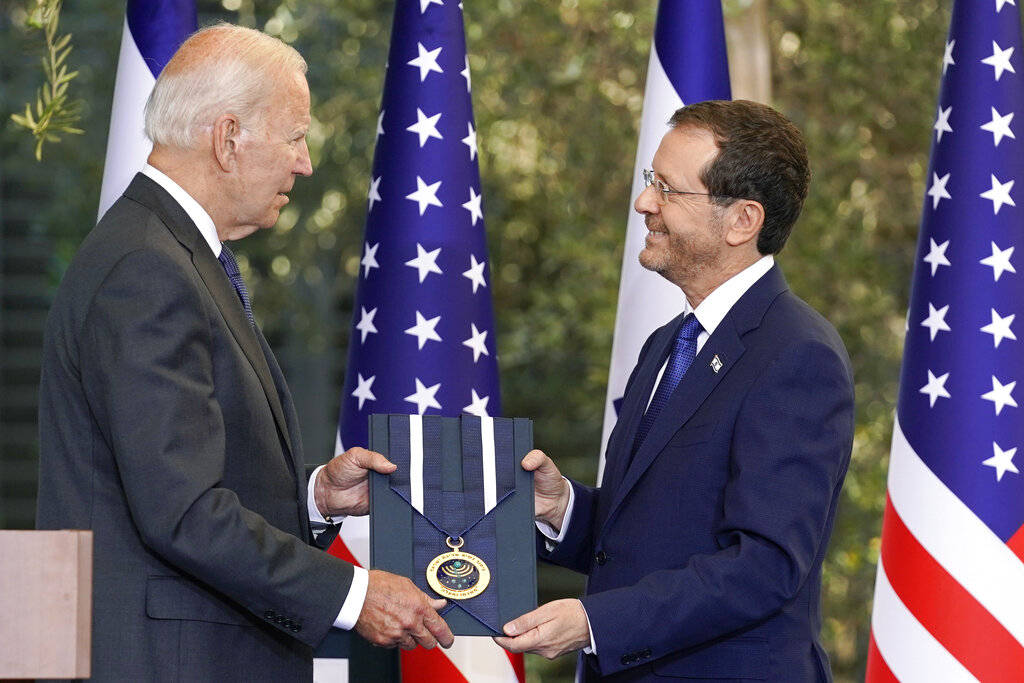
On July 14, 2022, President Biden gave remarks at a reception in Jerusalem directed to Israeli President Isaac Herzog, who bestowed the Presidential Medal of Honor on President Biden “for his true friendship” with the Israeli state, its people, and the Jewish people. It is noteworthy that in the praises he sang for Israel, he found nothing positive to say about Palestine. Instead, his speech reveals a couple of points on the place support for Israel has in America’s political culture. For one, as a head of state, Biden supported Israel because his “love for Israel is deep rooted;” he grew up loving Israel because of his father, “a righteous Christian.” He states, “Today and in the future, that commitment [to Israel’s security]is not about me or any other American president. It springs from the deep affinity and enduring connection between our peoples.” This is remarkable, almost as if the alliance has a life of its own.
Four months after the October 7th Hamas attack on Israel, Matthew Lee of the Associated Press reported that the Biden Administration “restored a U.S. legal finding dating back nearly 50 years that Israeli settlements in the occupied Palestinian territories are ‘illegitimate’ under international law.” Secretary of State Antony Blinken was asked about the 3,000 houses that Israel said it would build in West Bank settlements in retaliation for “a fatal Palestinian shooting attack.” So, in his reply, Blinken made the statement about the illegitimacy of settlements built in the Occupied Palestinian Territories. Lee supposes the timing could be due to “growing U.S.-Israeli tensions over the war in Gaza” and the hearings being held by the ICJ on “the legality of the Israeli occupation.”
When U.S. presidents speak about the country’s alliance with the State of Israel, they all seem to be saying the same thing, which is that nothing can or ever will tear the U.S. and Israel apart. It makes one wonder whether they truly believe or own the words they are saying because such words have been deposited deep within the soil of America’s political culture that Israel and the U.S. take on the appearance of natural allies, without question. Although U.S. presidents turn a blind eye to Israeli settlements in the West Bank, such strong support shines with ideology and, in fact, runs counter to U.S. national interests. So, while agreeing with Israel or Netanyahu on all things is a matter of choice, not a conspiracy—as U.S. presidents, including Trump, have openly disagreed with their Israeli counterparts on specific policies, no president so far has been willing to produce breakthrough policies that provide justice to the Palestinian people because an ideological favoritism toward Israel ultimately restrains them.

Nurah Elmashni is a second-year master’s student at NYU studying International Relations with a concentration in Middle Eastern and Levantine Studies. She graduated summa cum laude with a BS in Diplomacy and International Relations from Seton Hall University. Her academic interests include US-Middle East relations, Arab regionalism, political and imperial expediency, critical security studies, and anti-corruption. She is interested in researching the liberal international legal order and Christian Zionism vis-à-vis the question of Palestine.