The Real Donroe Doctrine: Foreign Interference during Election Years

President Donald Trump waves, with Secretary of State Marco Rubio, before departing on Marine One from the South Lawn of the White House, March 20, 2026. (AP Photo/Alex Brandon)
The Trump administration’s capture of Venezuelan President Nicolás Maduro and subsequent backing of his regime by naming Vice President Delcy Rodriguez his successor, has left the media, world leaders, and the public baffled. The BBC decried both the event and Trump’s continued defense of unilateral action as harkening back to the age of empires. Members of the opposition in Venezuela, as well as U.S. politicians, spoke about their hopes that Maduro’s capture would lead to the strengthening of democracy, but the Trump administration has made it clear that a new system of government in Caracas is not its top priority—it is Venezuelan oil. A similar, though less well-strategized, maneuver is currently underway in the current strikes against Iran. In the same way as the Venezuelan case, the U.S. struck out with Israel without first consulting allies, with the stated goal of regime change. However, the lack of previous strategizing has already begun to backfire in ways that are continuing to develop.
The complexity and precision of the Venezuela operation, on the other hand, show that the Trump administration prepared for the strike months in advance, acquiring an incredible amount of insight into the inner workings of the Maduro regime. But the fact remains that it will take months, if not years, to see any gains from taking control of, and then rebuilding, Venezuela’s oil infrastructure. While the potential oil revenue was definitely an attractive factor, Trump’s current popularity slump ahead of this year’s midterm elections may have been the primary reason for the intervention. This style of attempted approval-boosting is not new. It can be understood as part of a larger pattern where Trump engages in high-risk, high-publicity foreign intervention during election years, seemingly in hopes of raising his approval ratings enough to secure his desired electoral outcome.
First Term Intervention: The Soleimani Assassination
In late 2019, right before the 2020 presidential election year, the first Trump administration went through a rough patch that saw voters lose confidence in the government. In late October, Trump’s approval rating dropped to on of the lowest points of his presidency. Despite some small gains just before the new year, his approval declined again right at the end of December.
On Jan. 3, 2020, six years to the day before the Maduro capture, Trump’s first administration assassinated Qasem Soleimani, a top Iranian military official, in a targeted strike. Soleimani’s death sparked widespread fears of broader conflict and prompted Iran to publicize their decision to increase uranium enrichment. The strike came after months of verbal attacks against the Iranian government and the US withdrawal from the Obama-era nuclear agreements with the regime. In the two weeks following the assassination, Trump’s approval rating soared to 49%, the highest marker it would reach in his first term, according to Gallup polling. It would later reach this number again directly after the U.S. response to an Iranian strike on a military base in Iraq in March of 2020. The correlation between these flashy policy moves and the positive public reaction is striking even if they did not directly cause the spike, and this trend definitely did not go unnoticed by the Trump administration.
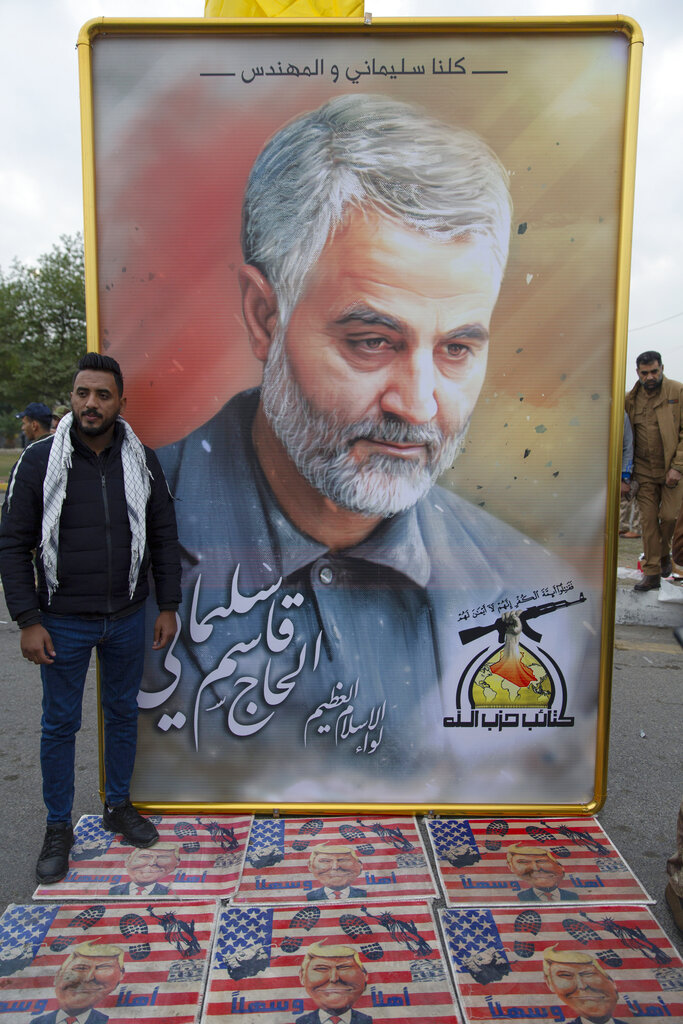
The Soleimani assassination was in line with a wider pattern of Trump’s “America First” foreign relations, which largely consists of rhetoric attacking whoever he defines as America’s enemies abroad. Embedded in this greater strategy is an emerging cycle where the administration seeks to engineer public support and higher approval ratings through large-scale, one-off foreign interventions. Raising the possibility of extended conflict with Iran during an election year was a risky choice, and the spike in approval ratings was likely the administration’s aim. However, it was not enough to combat Trump’s deteriorating support in the 2020 presidential election, especially in the wake of the administration’s lackluster response to the COVID-19 pandemic. Looking back on the Soleimani assassination, the Trump administration made revisions to its foreign intervention in Venezuela—which Trump may believe will give him a better shot at turning the midterm election results in his favor.
Hope and Spectacle: Venezuelan Oil and the Maduro Trial
There were two issues with the Soleimani assassination which limited its political usefulness: there were no material gains for the American people and Soleimani was ultimately killed.
On Jan. 6, Jesse Watters—a Trump ally at FOX News—ran a segment defending Trump’s actions in Venezuela. In the segment, Watters stressed that intervention in the Middle East doesn’t bring any profit to the American people, but by intervening in Latin America the US can “get paid” for its efforts to help other countries. Oil industry sources say that Trump wants to use the seizure of Venezuelan oil as a “big win” for the American people and emphasizing the economic restructuring of Venezuela as a benefit to the U.S. The new emphasis on economic value, rather than the moral victory of deposing a dictator, is the first part of Trump’s strategic shift in his approach to foreign intervention.
An economic win is definitely something that would make American voters happy. Since Trump was elected for the second time, his economic approval has been in decline. A majority of voters in a PBS poll taken in late December said that they did not approve of the way that Trump was handling the economy and had a “negative view” about their financial wellbeing for the year ahead. Now, with Venezuela’s oil reserves supposedly at the U.S.’ disposal, Trump may lean on the possible economic gains to convince voters to support the GOP in the midterms. It is likely he will use the mirage of future economic prosperity via Venezuelan oil to try and convince voters that he can deliver on his promises of lower grocery prices and a generally more affordable country. With Soleimani’s assassination, the only thing he was able to bring to the American people was fear of re-entering a drawn out conflict in the Middle East.
The second aspect of this foreign policy action that gives it more political capital than the Soleimani assassination is the fact that it was not an assassination. Maduro was captured, taken into custody, and will now have to go through the infamously long American judicial process. This means that the Trump administration will have more opportunities to use this incident if the president needs an approval boost.
There were only two major events that the administration could use in the Soleimani assassination to get broader popular support: the assassination itself and the U.S. retaliatory strike against Iran’s aggression in Iraq. However, with Maduro’s capture, the administration will be likely to see a boost in approval ratings every time he is made to make some kind of public appearance during his trial. This has much more political longevity and is also less politically risky than engaging in tit-for-tat in retaliatory military strikes against a foreign nation—something which has long since fallen out of favor with voters on both sides of the aisle. The recent U.S. strikes in Iran support this idea. Following the Maduro capture, Trump’s approval rating raised seven points according to CNN polling. Directly after the coordinated military operation in Iran, however, his approval rating stayed about the same as it had been before the strikes.
This makes sense, as pivoting towards a snatch-and-go style of foreign intervention aligns with Trump’s messaging that the United States will stay out of long-lasting foreign wars while also providing a symbolic win for the administration. The current military intervention in Iran is not providing his base is threatening to draw the United States into another protracted war in the Middle East while also driving up gas prices—two things that the Trump administration promised to avoid. While the Trump administration was able to secure the symbolic victory of killing Ayatollah Ali Khamenei, the government’s decision to announce his son, Mojtaba Khamenei, seems to nullify the effects of killing his father. Unlike Venezuela, there does not seem to be an easy road to reconciliation and reaffirmation of US strength and influence.
Risky Foreign Intervention: A Lasting Strategy?
The Maduro capture served to help the Trump administration make some gains among his base in a crucial midterm election year. However, the recent intervention in Iran—which appears to have been undertaken with the aims of providing another symbolic victory to his base—appears to be backfiring. What was supposed to be another easy win for the Trump administration is now appearing to be the possible start to another “forever war” in the Middle East. From this, it is unclear if the Trump administration will continue using foreign intervention as a way to attempt to bolster voter support. What is clear is that this kind of risky foreign intervention when his approval ratings are low is an emerging pattern for Trump during election years that poses a serious risk to both the international principle of sovereign rule and to domestic stability.
Anastasia Mentar (she/her) is a first-year Master’s student in the Politics Department. She completed her Bachelors at UC San Diego in International Studies, where she studied international business and international politics with a regional focus on China and East Asia. She completed her senior thesis on the effects of the education of women and girls on the economic development of India and Cambodia. Her background in political theory as well as educational and political activism inform her interpretation of large scale political events and political behavior of groups. She has experience in political organizing, campaigns, unions, grassroots activism, and nonprofit research and communications. When not working, she enjoys reading, spending time in nature with her dog, and exploring the city.